





-(1).png)
.jpg)
.jpg)
.jpg)
.jpg)
.HDi90.png)
.HD90.png)
.jpg)
.jpg)
.jpg)
.jpg)
.jpg)
.jpg)
.jpg)
.jpg)
.jpg)
.jpg)
.jpg)
.jpg)
.jpg)
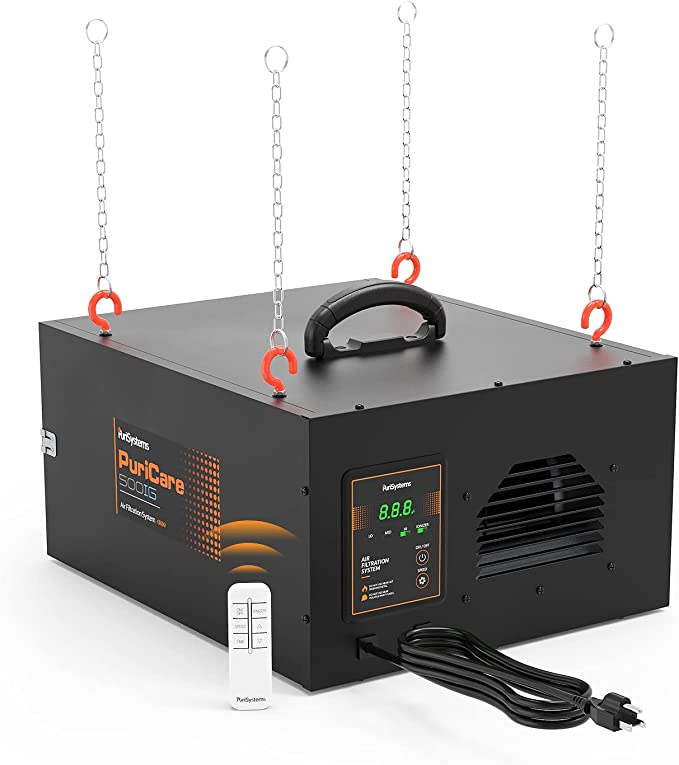
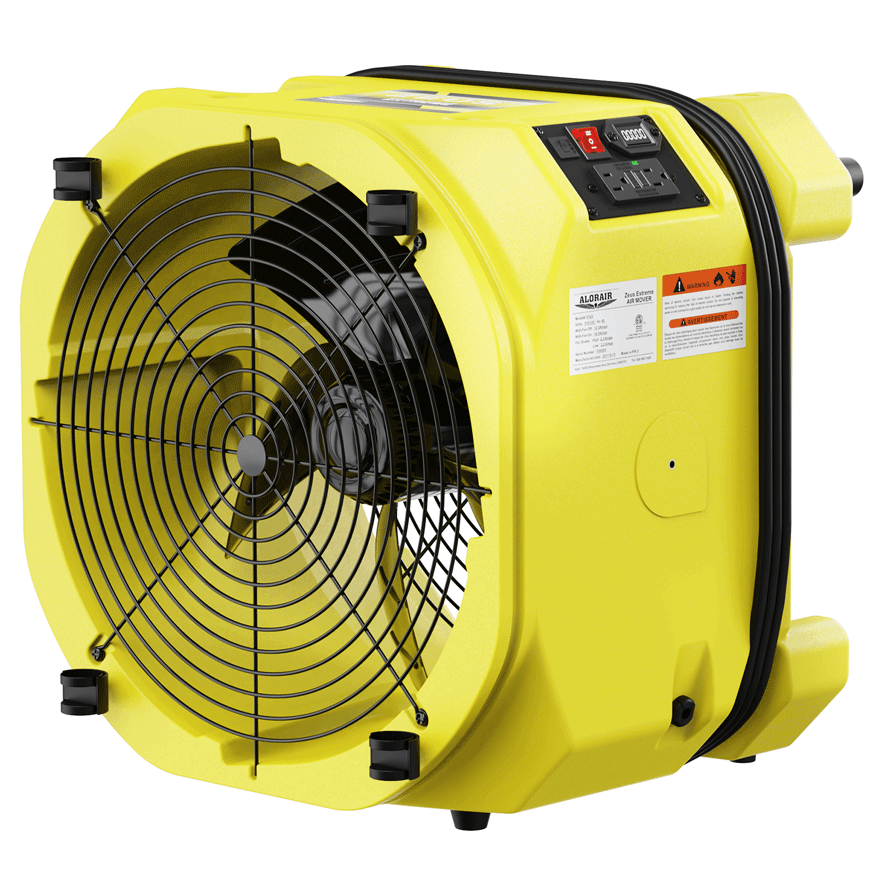
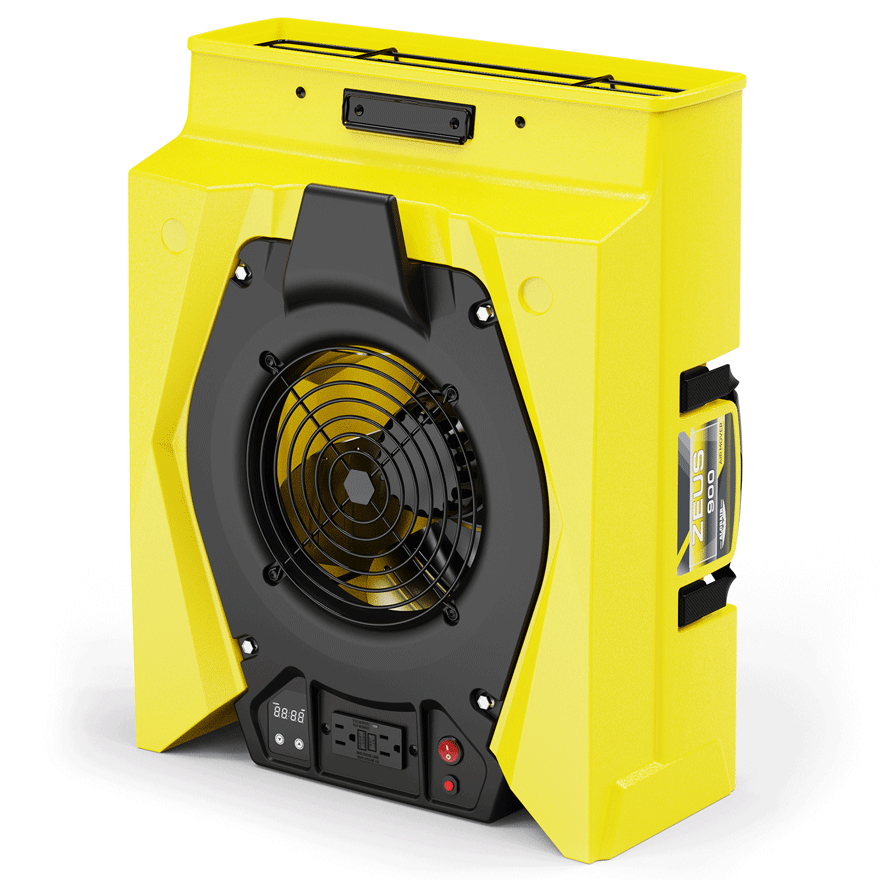
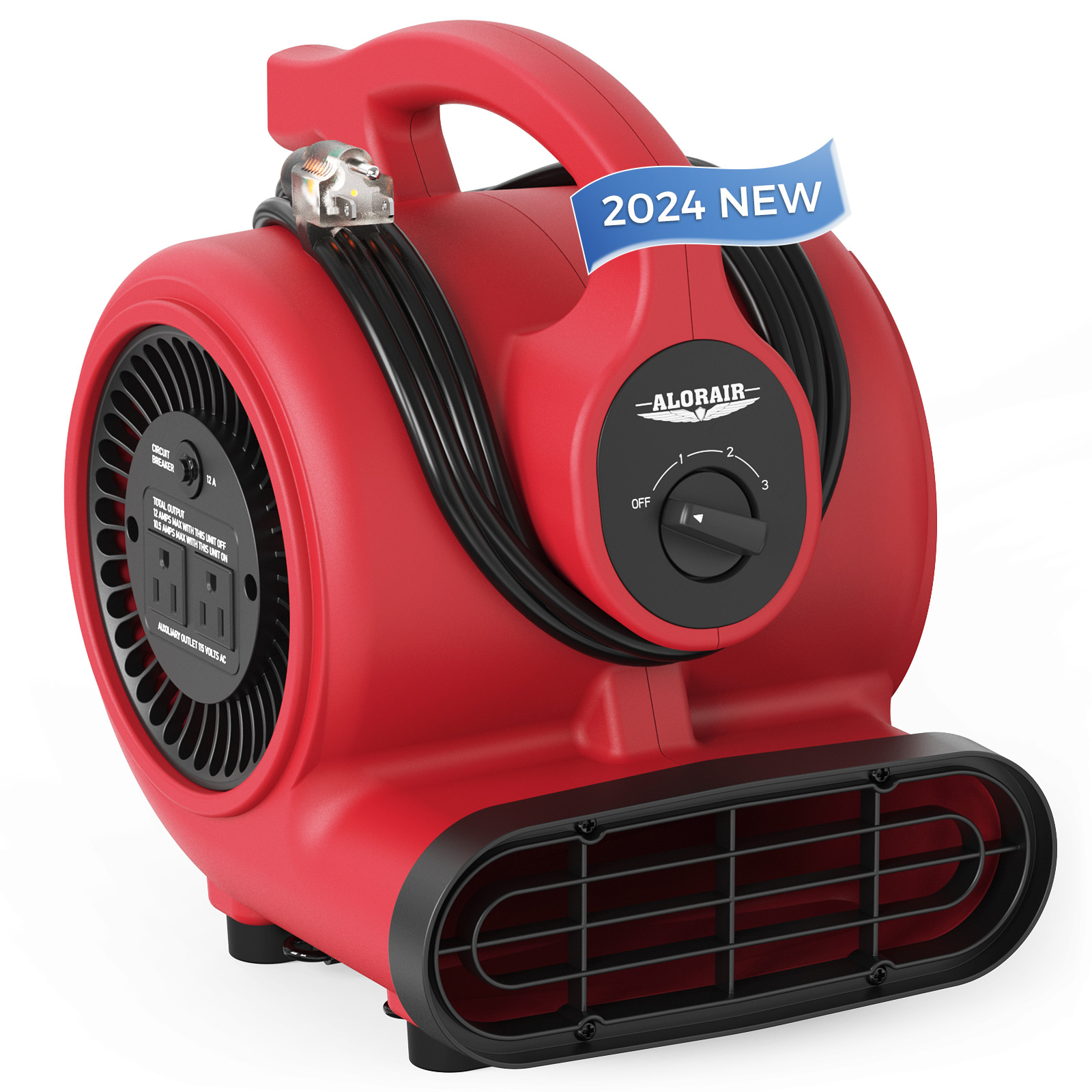
.webp)
.webp)
.webp)
.webp)
.jpg)
.jpg)
.jpg)
.jpg)
.jpg)
.jpg)
.jpg)
.jpg)
.jpg)
.jpg)
.jpg)
.jpg)
.jpg)
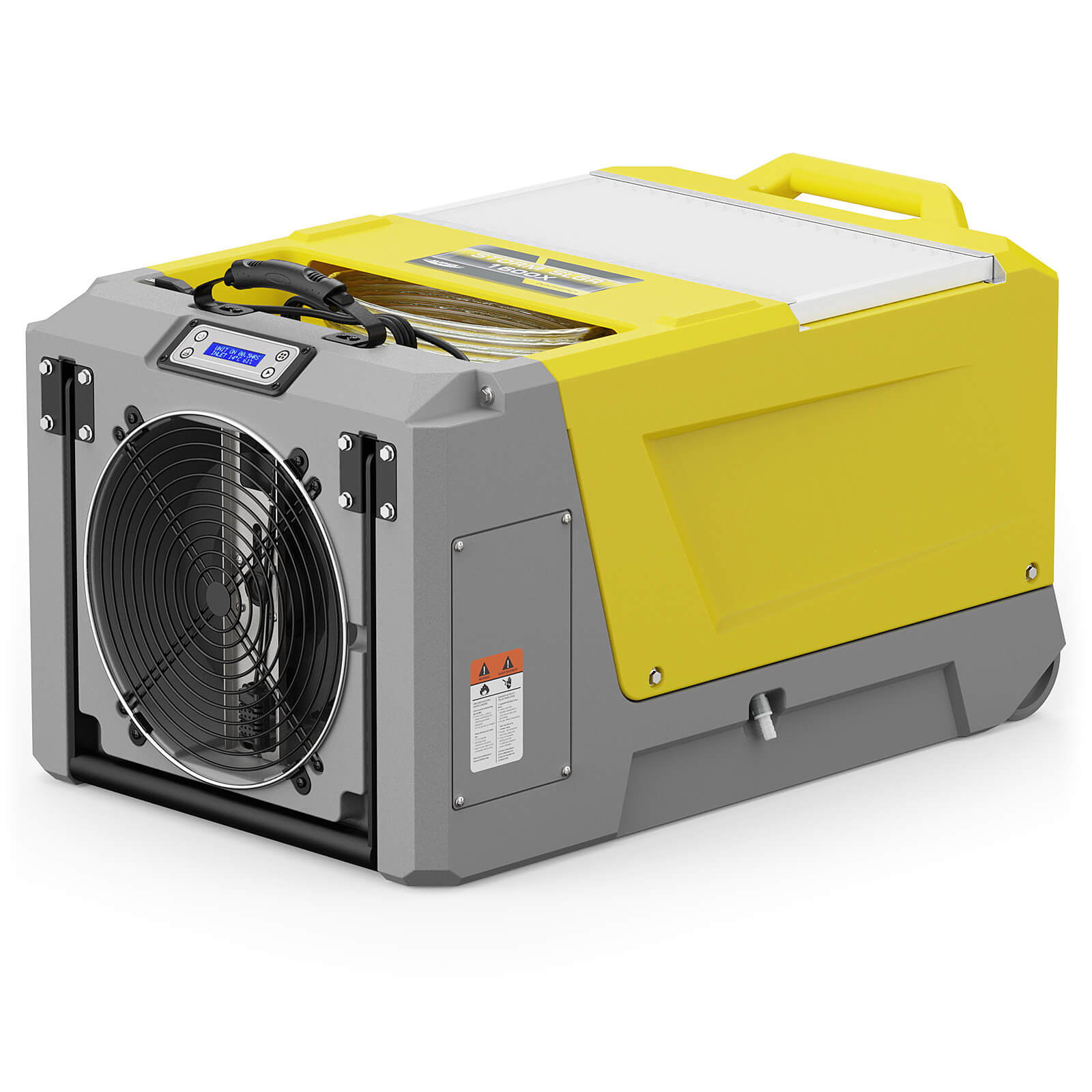
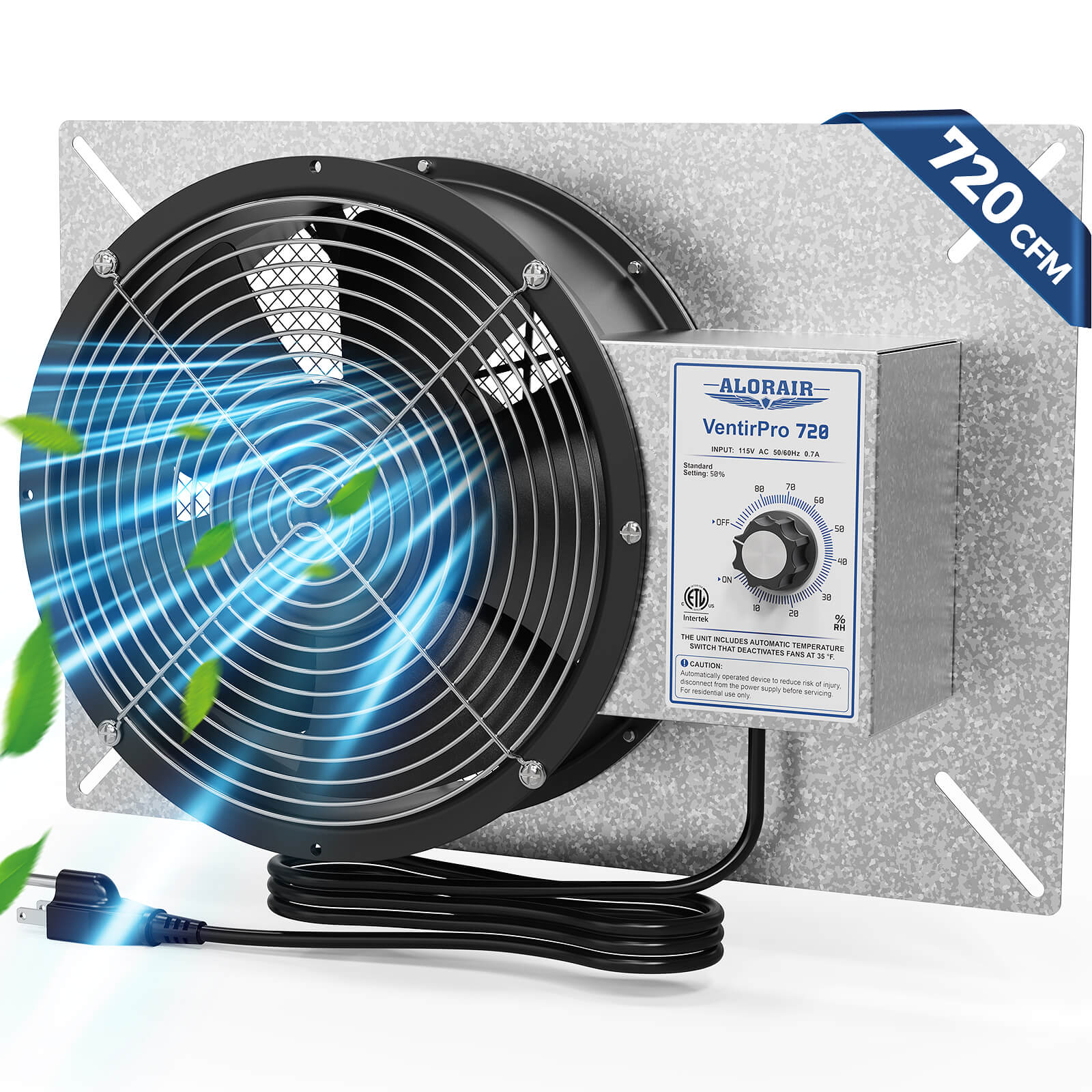
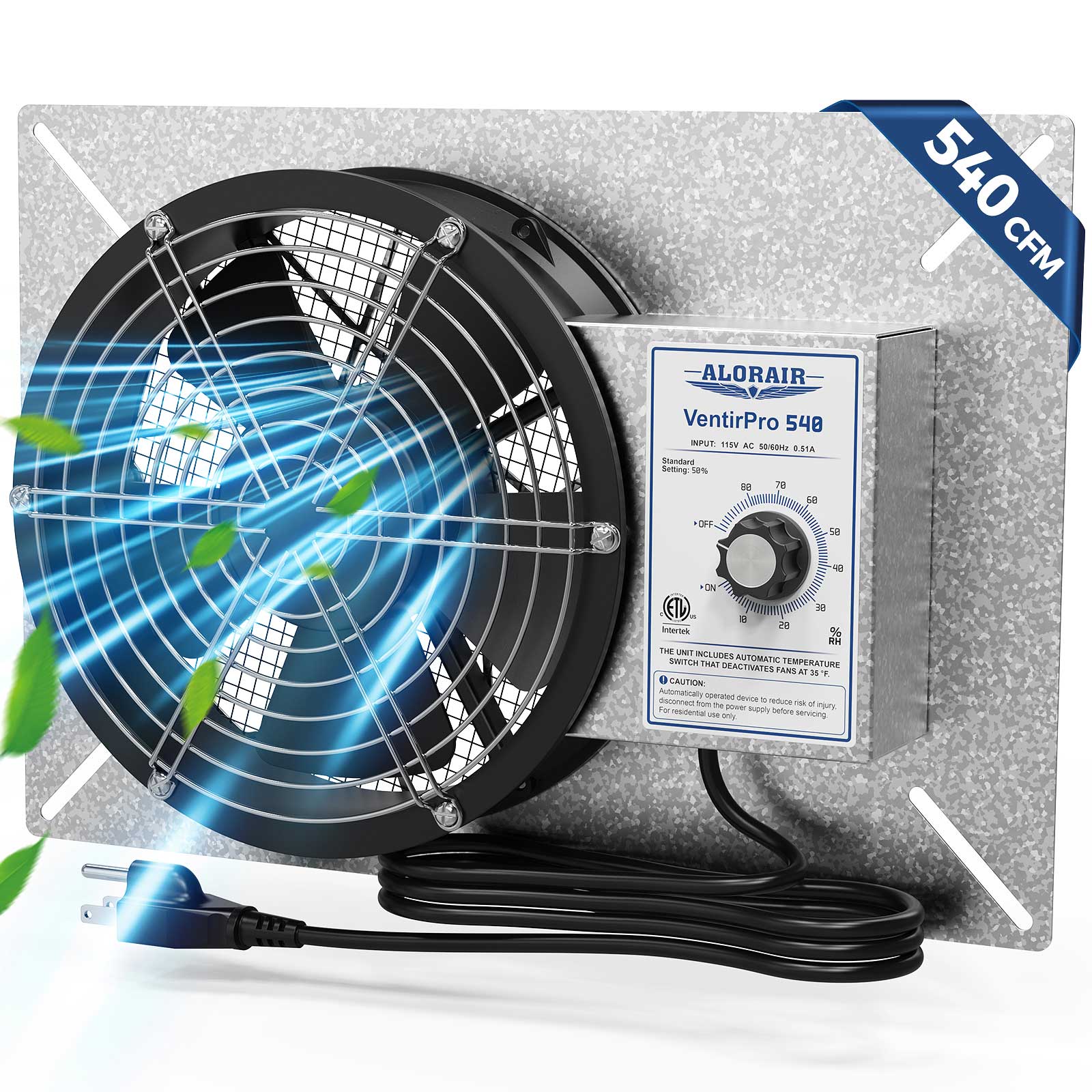
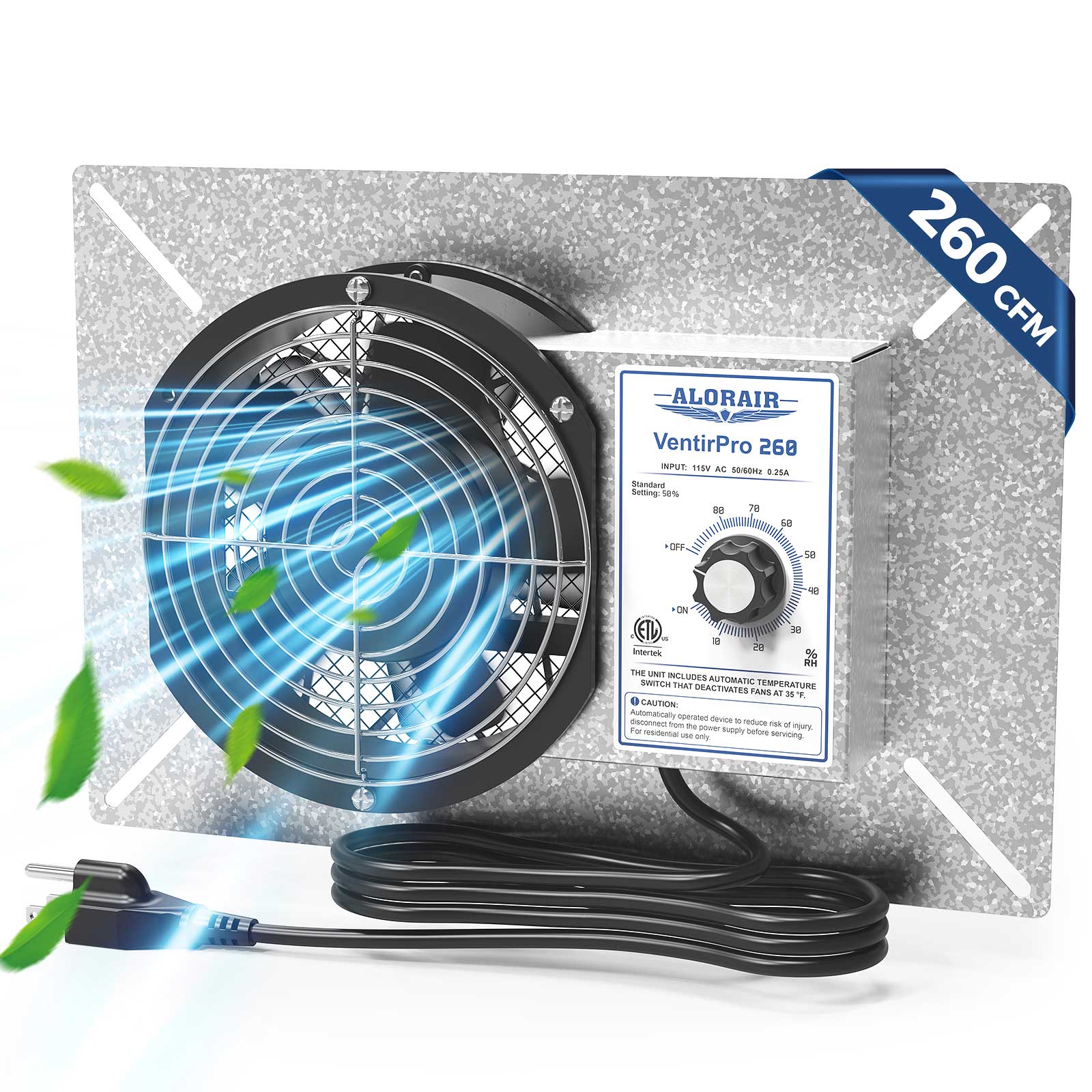
.jpg)
.jpg)
.jpg)
.jpg)
.jpg)
.jpg)
.jpg)
.jpg)
.jpg)
.jpg)
.jpg)
.jpg)
-.jpg)
.jpg)
.jpg)
.jpg)





















 Exclusive offers
promotions
Exclusive offers
promotions

Blowers and fans; both widely used tools for offering airflow and cooling across buildings, outdoors, inner spaces, and other areas. Also, these are key factors of HVAC setups. Although the terms ventilation fans and blowers often appear synonymous, they serve separate roles. Operating the wrong equipment can lower air circulation efficiency, reduce tool life, and raise noise or energy prices. Today’s guide explains the difference between blower fans and ventilation fans, and how to select the proper tool for your workshop, home, and warehouse.
What Is a Ventilation Fan?
The exhaust fans and blowers are defined according to their suction pressure ratio and discharge pressure by the American Society of Mechanical Engineers (ASME). As reported by ASME, a ventilation fan has a pressure ratio of up to 1.11.
These fans draw air from damp, stale, or contaminated air from a space and bring in fresh air to main air quality. It carries large amounts of air at low pressure, perfect for overall ventilation instead of forced direction. Below are the common types of ventilation fans:
- Exhaust fans in kitchens or bathrooms extract odor and humidity.
- Ceiling or wall fans freshen indoor areas by circulating air mildly.
- Inline fans in ductwork move air between floors and rooms.
Purpose and Benefits
A ventilation fan helps manage humidity, eliminate pollutants, and lower condensation on surfaces. With a low-pressure design, it becomes energy-efficient while moving enough air to facilitate comfort and air quality.
What is a Blower (Air Mover)?
A blower fan, also known as an air mover fan, creates directed air circulation at a higher pressure relative to a ventilation fan. It does not circulate normal air, however, it leads air forcefully through a small outlet to a particular region.
This concentrated layout lets blowers carry air via ducts, dehumidify moist surfaces, or cool devices effectively. According to the Engineering Toolbox, blowers are engineered to run in a pressure range of 1.13 to 29 inches of water gauge (in WG), much greater than the conventional ventilation fans.
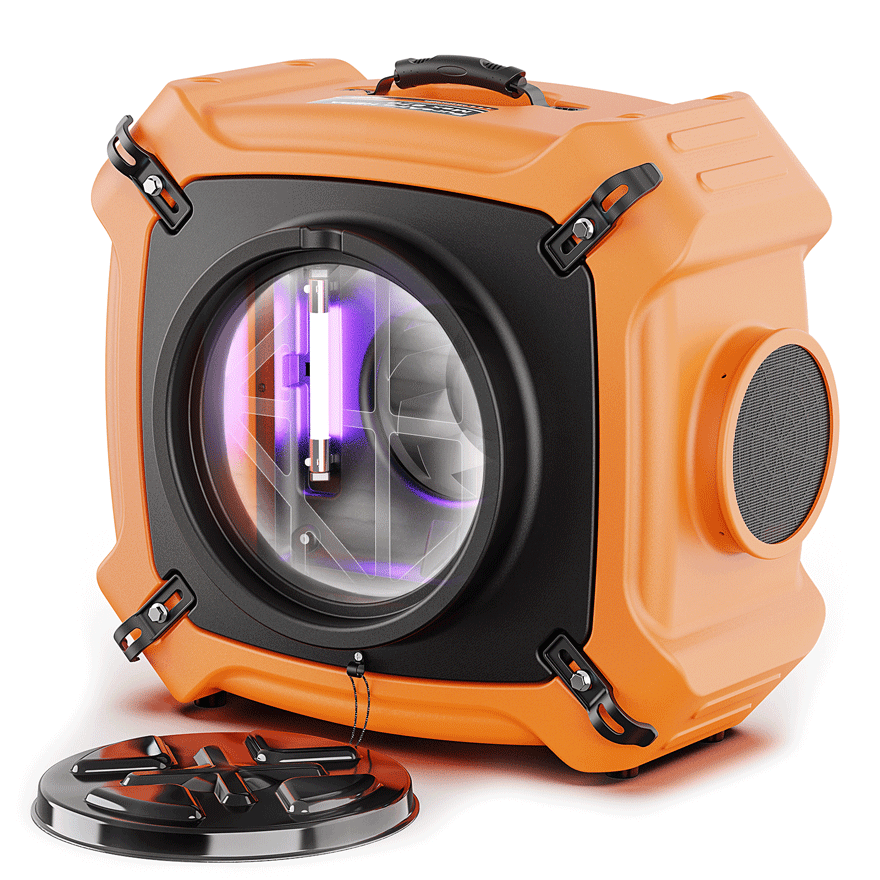
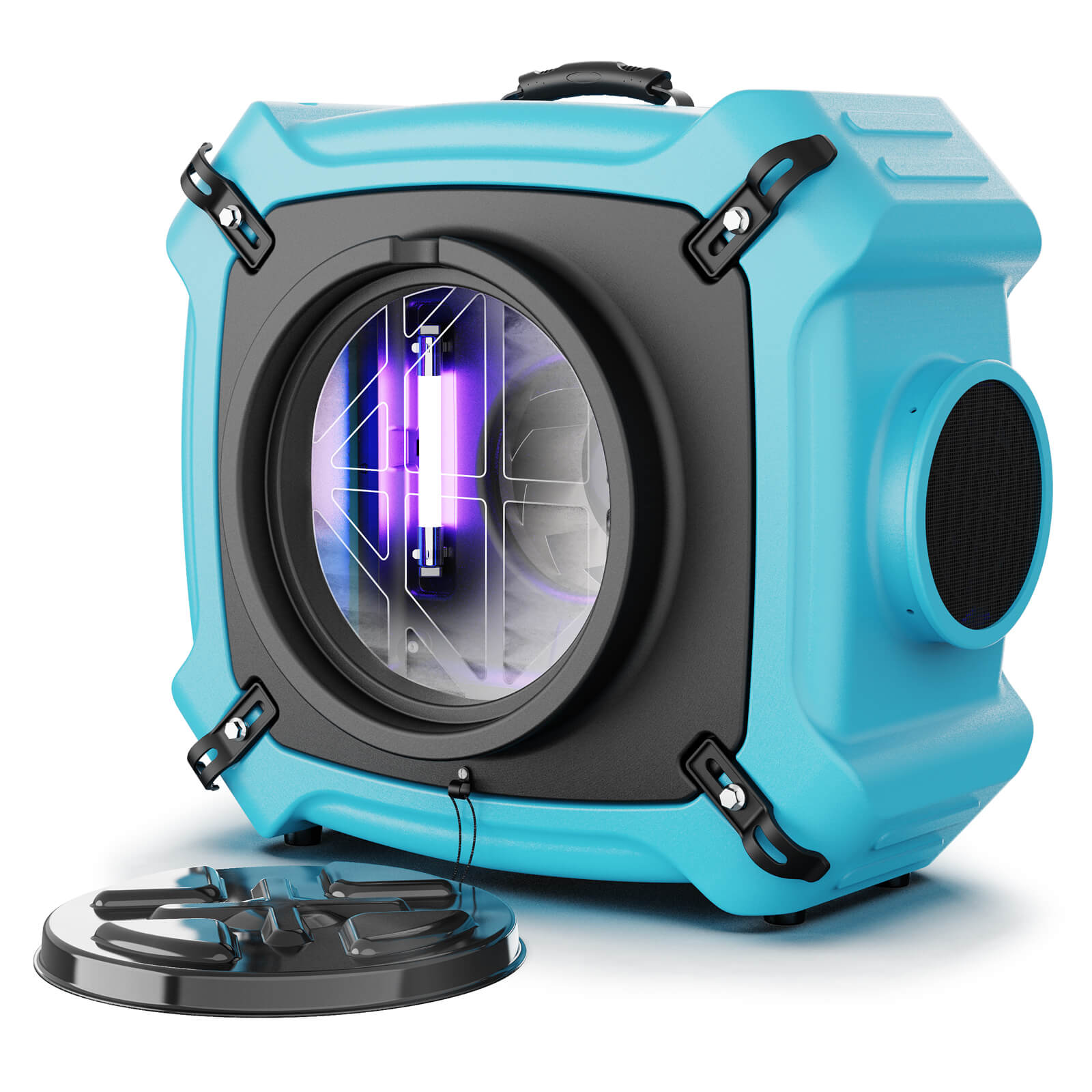
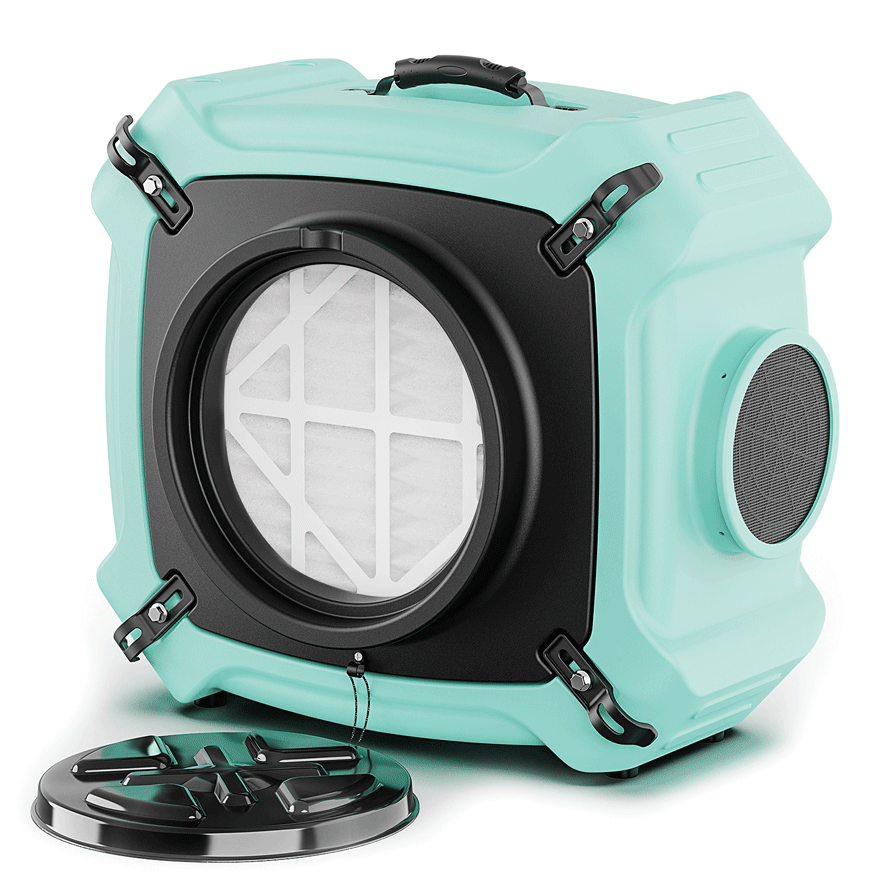
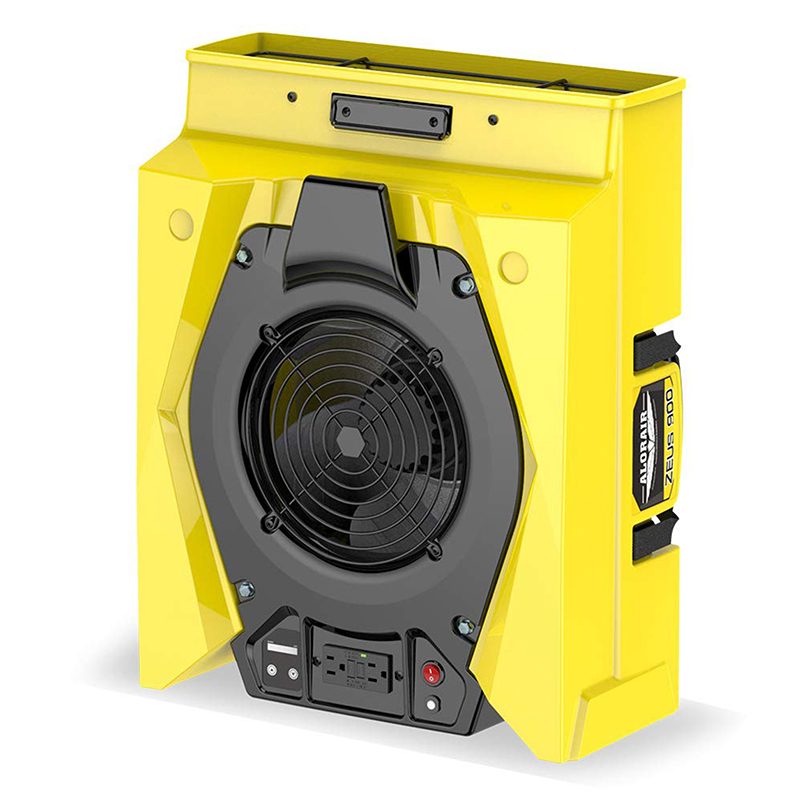
The AlorAir air mover fan lineup, for example, provides powerful directional airflow while keeping portability and energy efficiency.
Types of Blowers
- Axial Blower: Moves air in a straight line, best for quick surface drying or airflow in narrow areas.
- Centrifugal Blower: Moves air outward through a rotating impeller. Common in HVAC systems and drying usage, such as water restoration.
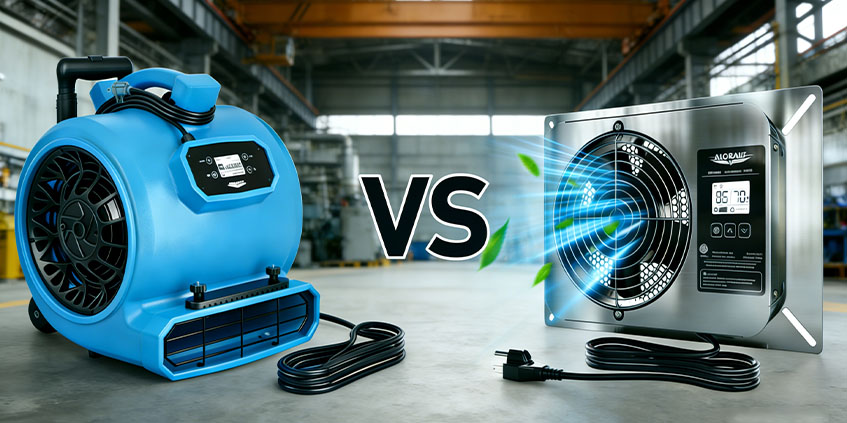
Key Differences Between Ventilation Fans and Blowers
While the two tools move air, they achieve it in distinct ways and for different purposes. A grasp of these differences helps you in choosing the right equipment for your needs.
| Feature | Ventilation Fan | Blower |
| Airflow Type | Moves large air volume at low pressure | Moves a smaller air volume at high pressure |
| Primary Function | Circulates or exhausts air for ventilation | Concentrates air for drying, cooling, or pressurizing |
| Typical Use | Homes, offices, workshops (e.g., exhaust fan) | Restoration, industrial drying (e.g., carpet drying fan) |
| Noise Level | Generally quiet | Louder due to higher pressure output |
| Energy Use | Lower energy demand | Higher power draw for concentrated airflow |
Functional Summary
Blowers direct air; fans ventilate areas. Ventilation exhaust fans prevent excess humidity and sustain indoor comfort; however, blower fans deliver powerful, controlled ventilation to handle cooling or moisture requirements.
Choosing the wrong device can minimize performance and waste energy. The Energy Department highlights matching airflow pressure and capacity to the particular environment for excellent performance.
Choosing Between a Fan and a Blower: What to Consider
Now with a better understanding of different features, use cases, and benefits, you can choose the perfect match for your requirements. Below are factors to consider:
Step 1: Define Your Airflow Goal
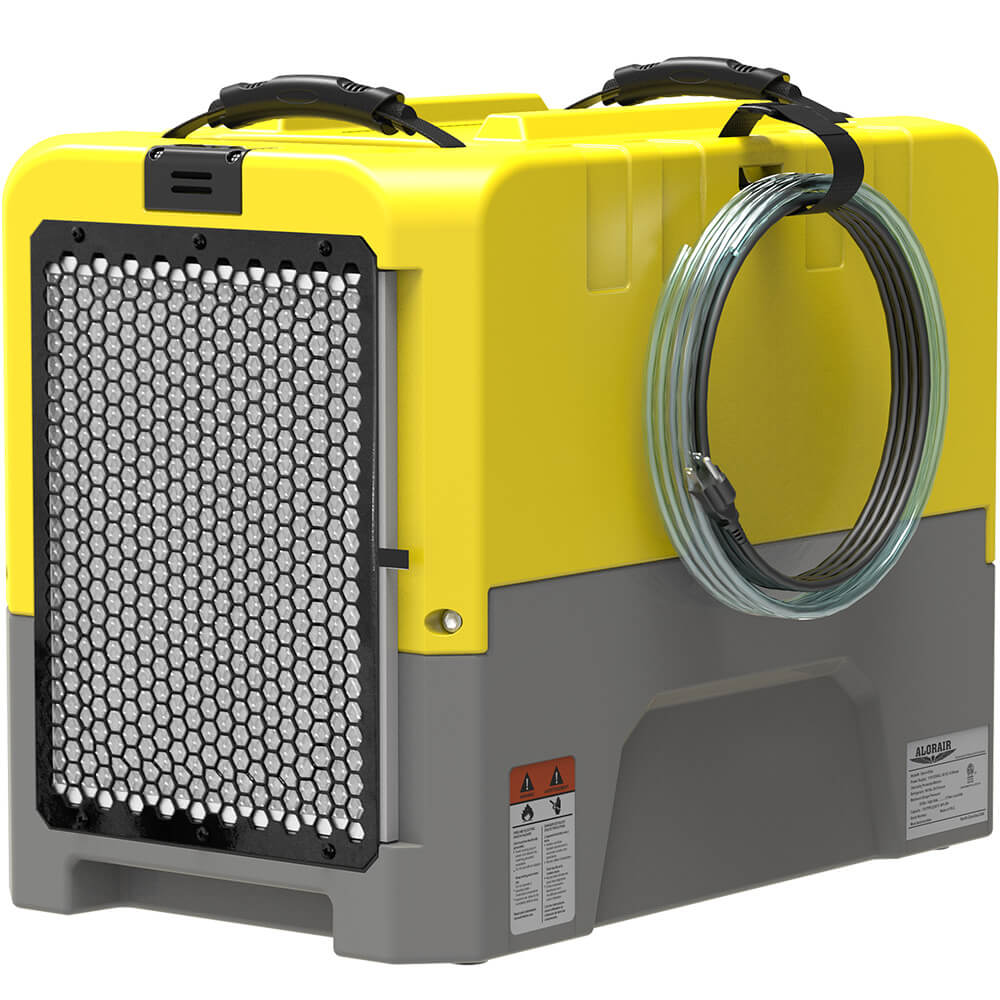
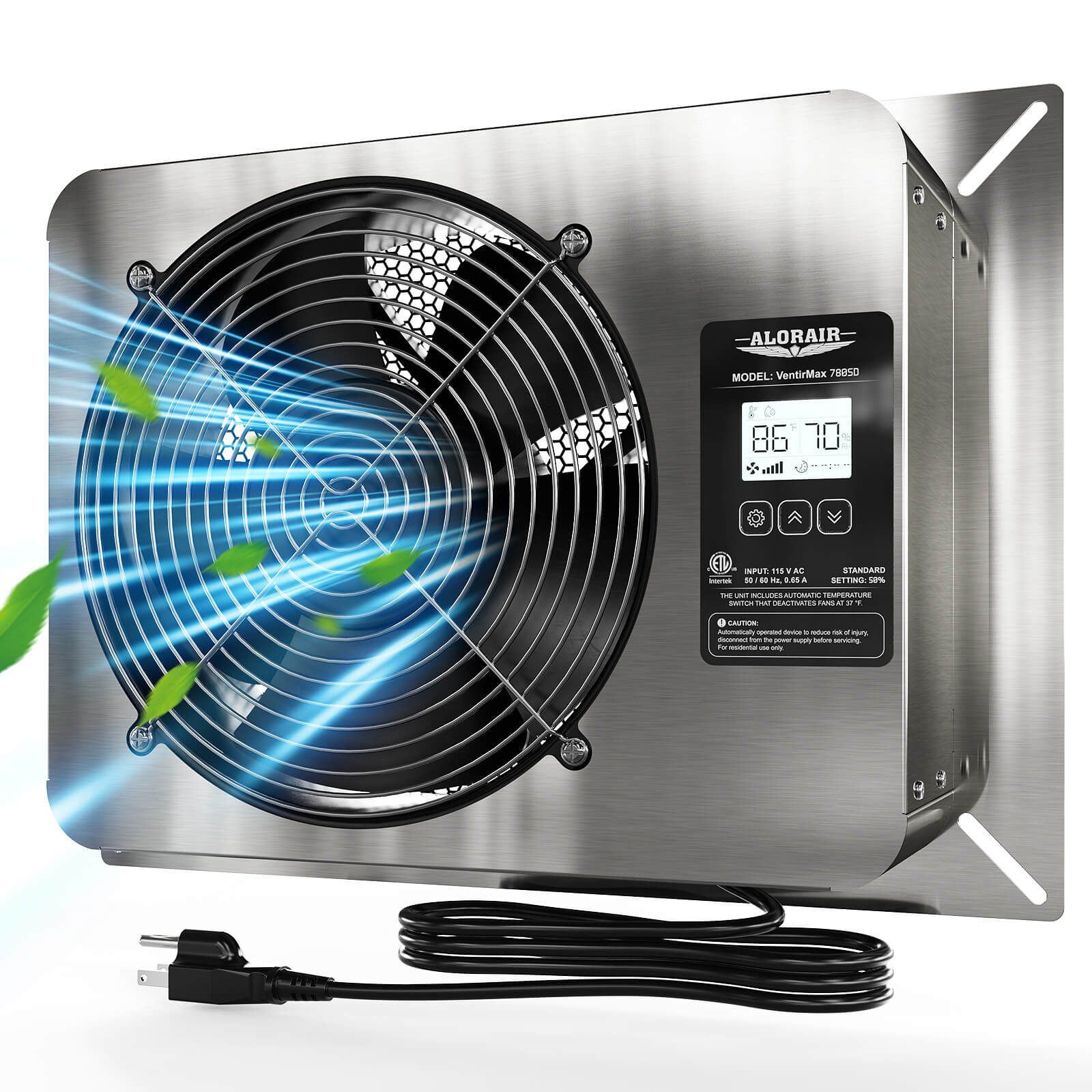
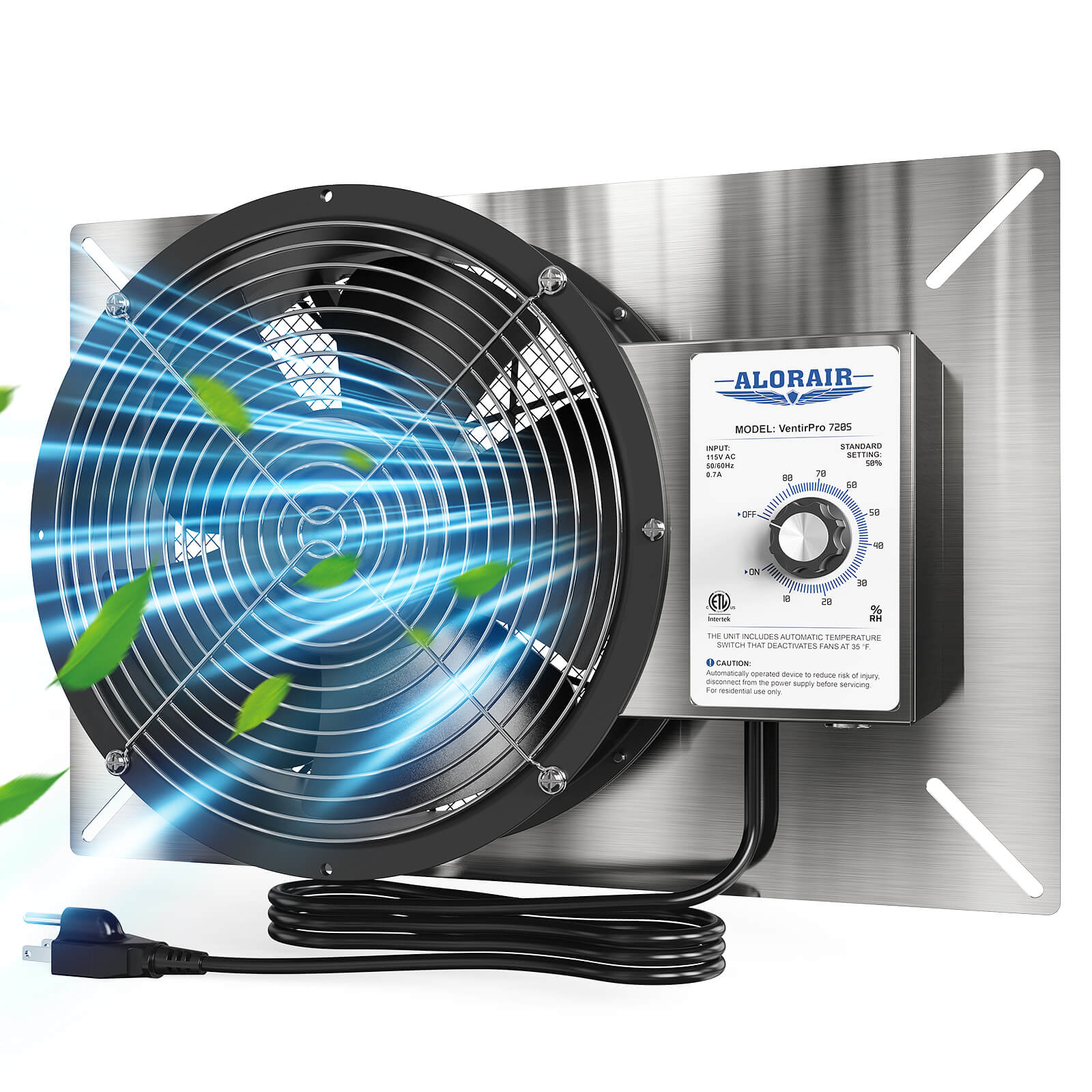
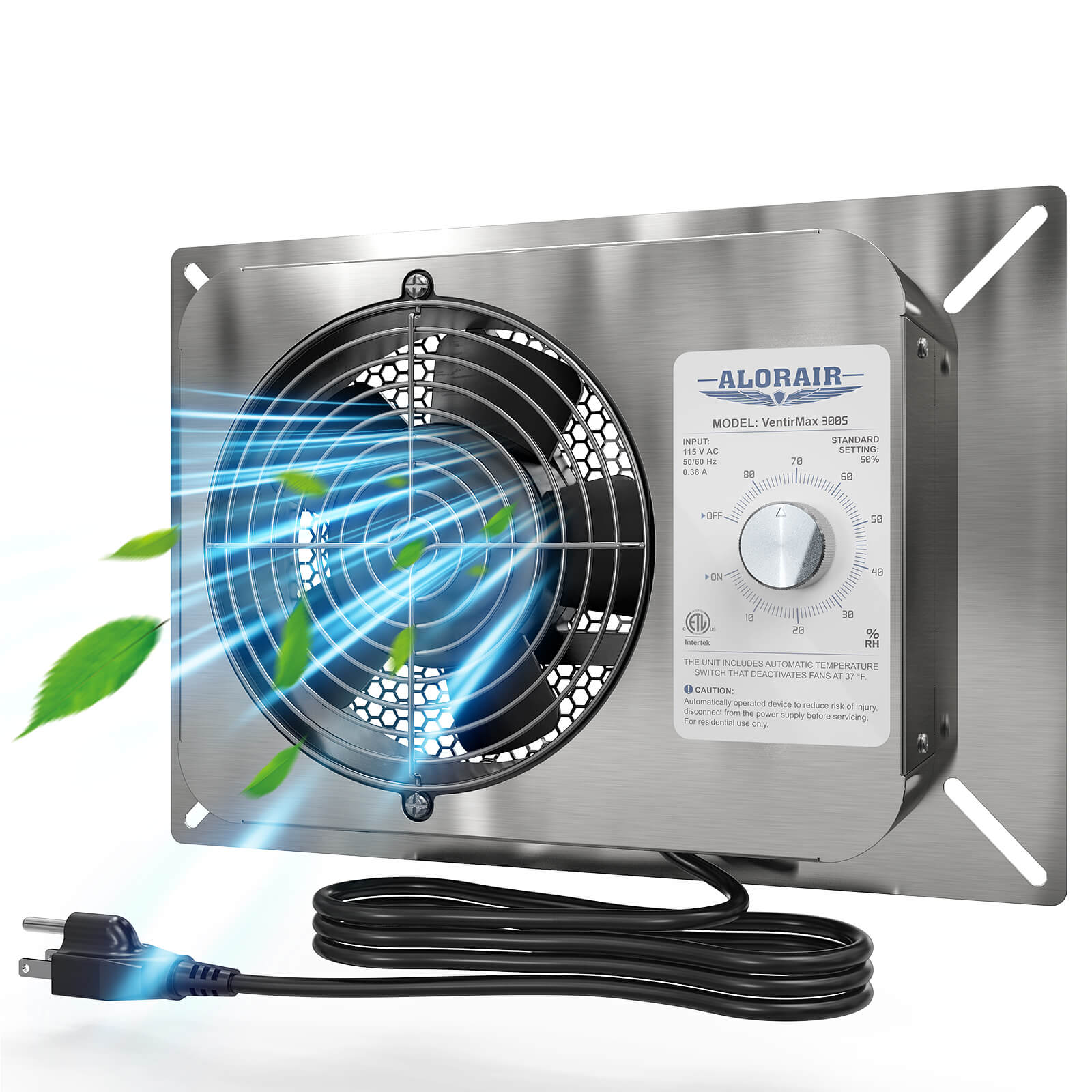
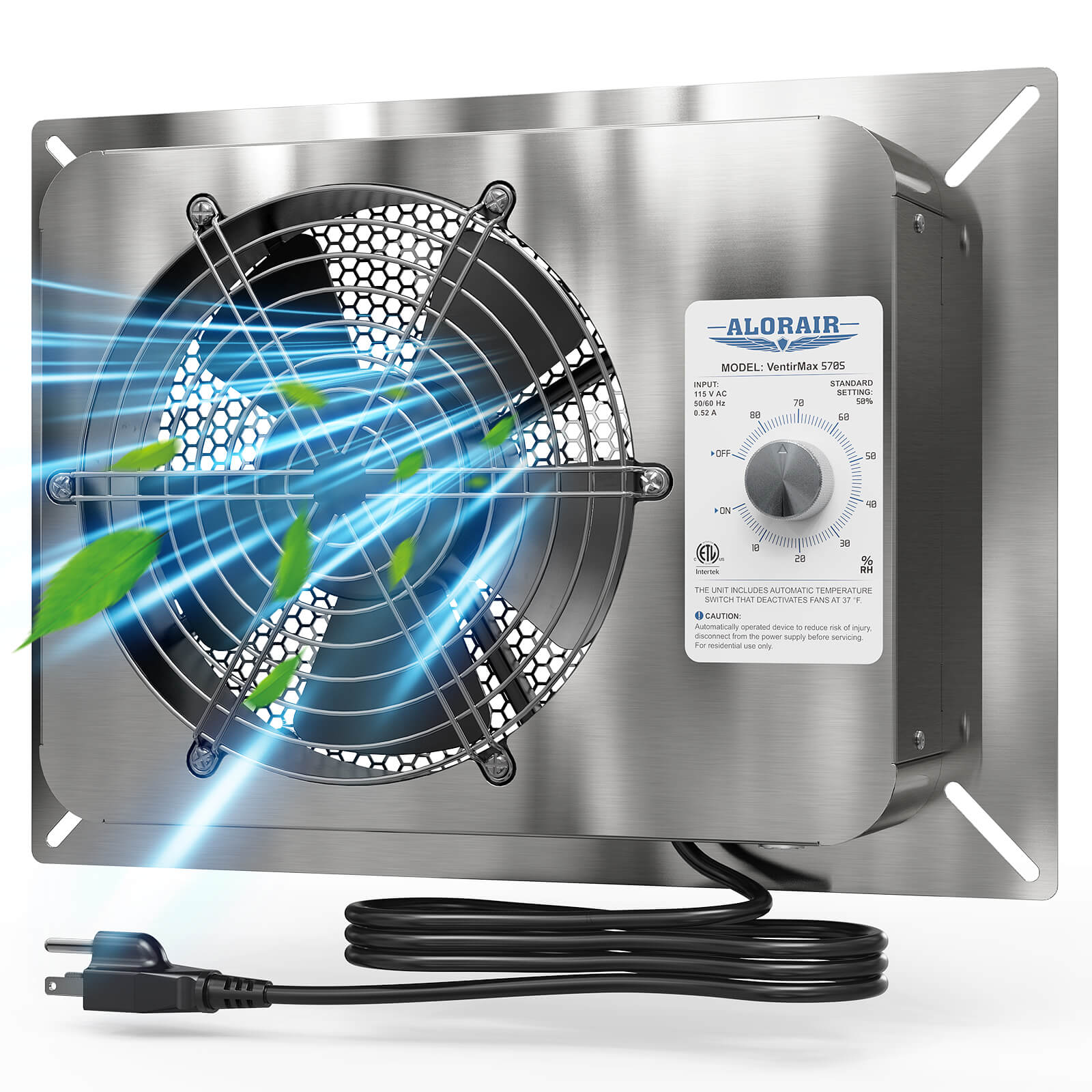
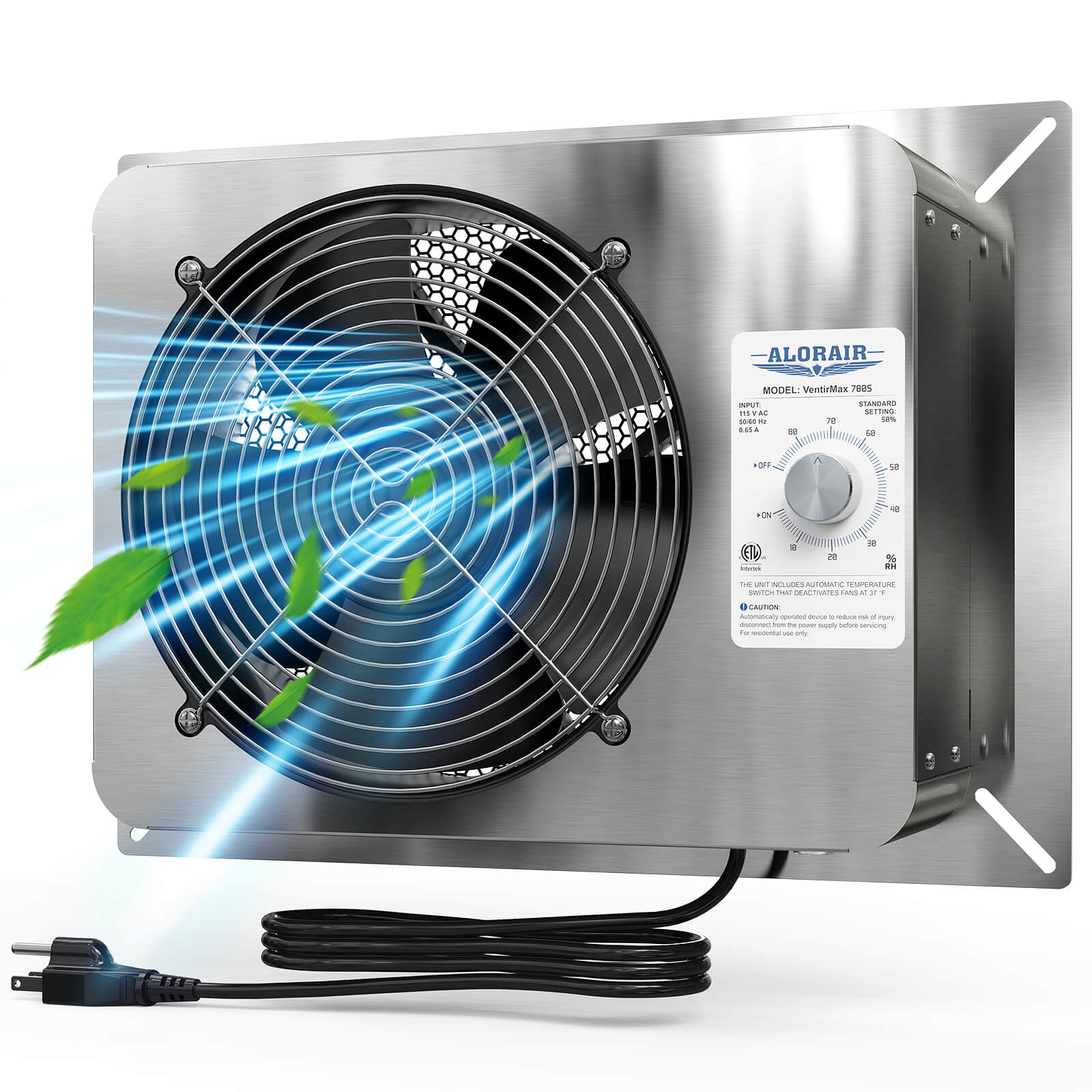
Begin with your purpose. Prefer an exhaust fan like ALORAIR® VentirMax 300SD if you need to ventilate a space, extract dead air, or lower dampness. This compact ventilation fan is suitable for humidity control up to 550 sq. ft, has a built-in dehumidifier, and quiet operation.
Choose a blower fan if you need to dry carpets, wet floors, or construction materials. Every tool does better under particular air-pressure conditions.
Step 2: Match to Space and Airflow Volume
Closed spaces or smaller rooms require high-pressure movement from a blower, whereas big open rooms require the extensive airflow that fans offer. Therefore, always inspect the air circulation rate (CFM) to suit your space size.
For instance, typically a 100 sq ft bathroom needs a fan rated at 100 CFM. However, a water-damaged room may require a carpet drying fan rated among 2500-3000 CFM to refresh surfaces efficiently.
Step 3: Consider Noise and Energy Use
Generally, ventilation fans are noiseless and use less energy. Blower fans are louder because their greater pressure output, however, brings rapid results when drying materials.
According to the U.S. Department of Energy, matching air circulation output with the current task lowers both system damage and energy misuse.
Step 4: Evaluate Portability and Installation
- Fans: Often mounted to ceilings or walls and attached to ductwork.
- Blowers / Air Movers: Made for portability, support easy movement between drying zones.
The combination of two systems produces optimal results.
AlorAir Ventilation Fan Series: Built for Controlled Air Exchange
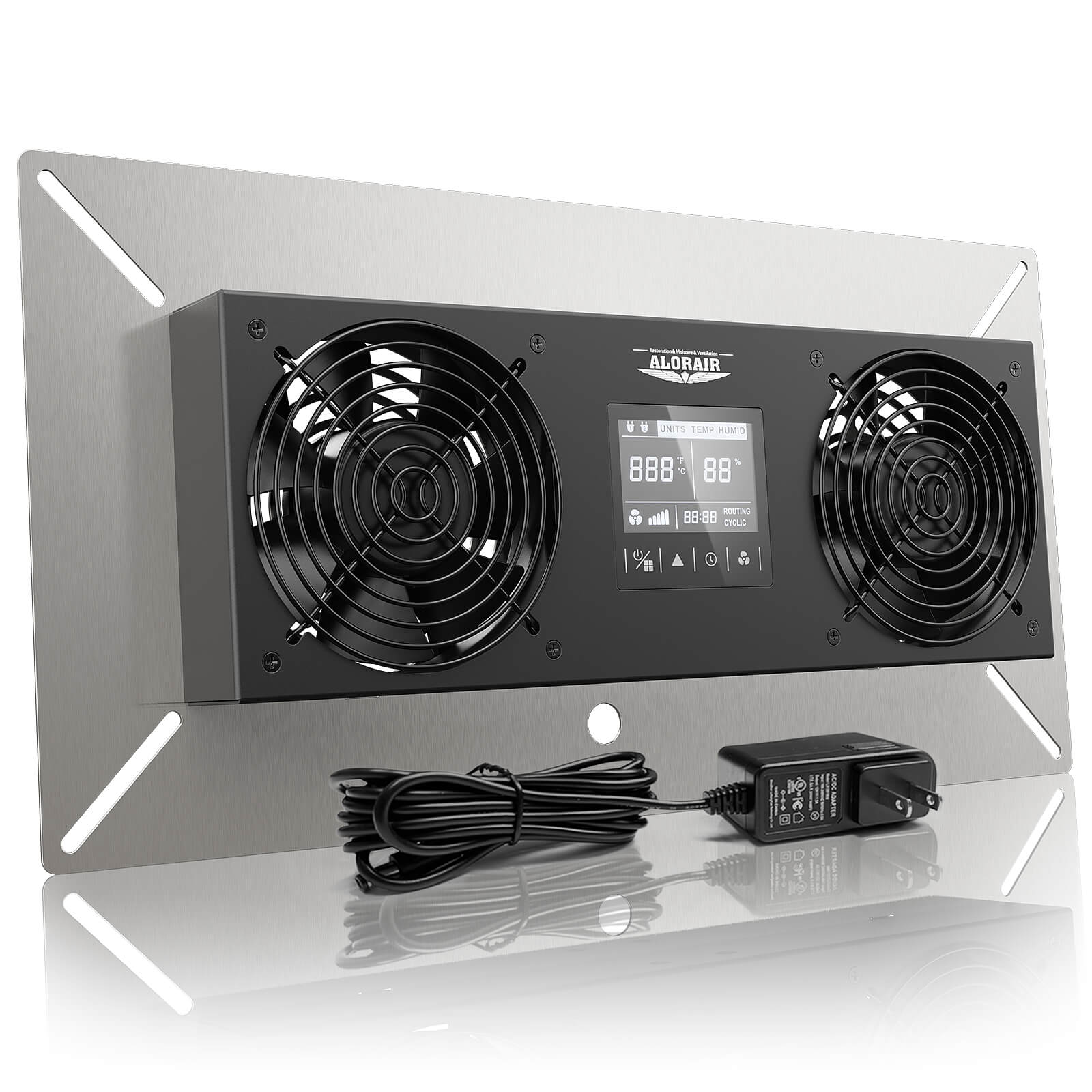
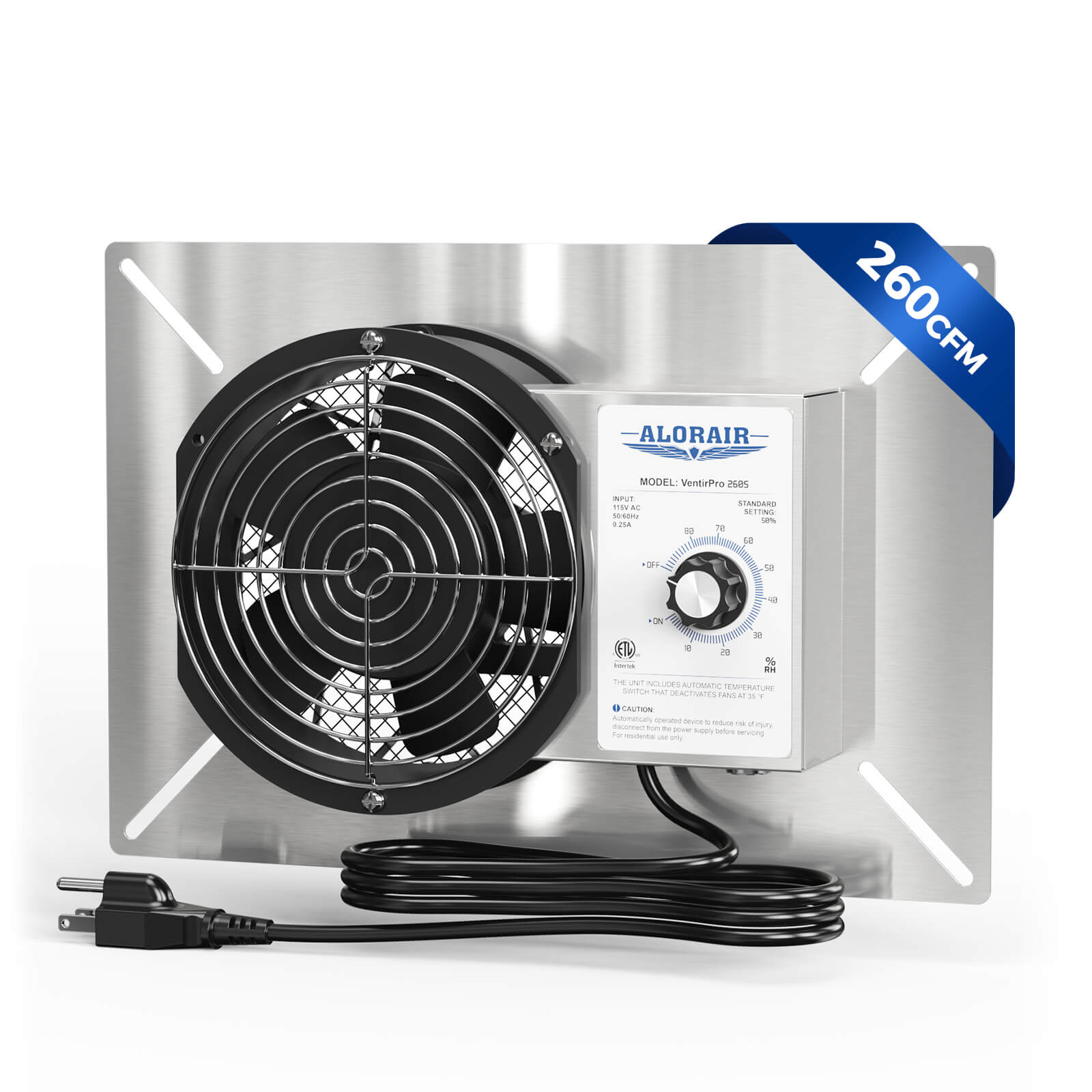
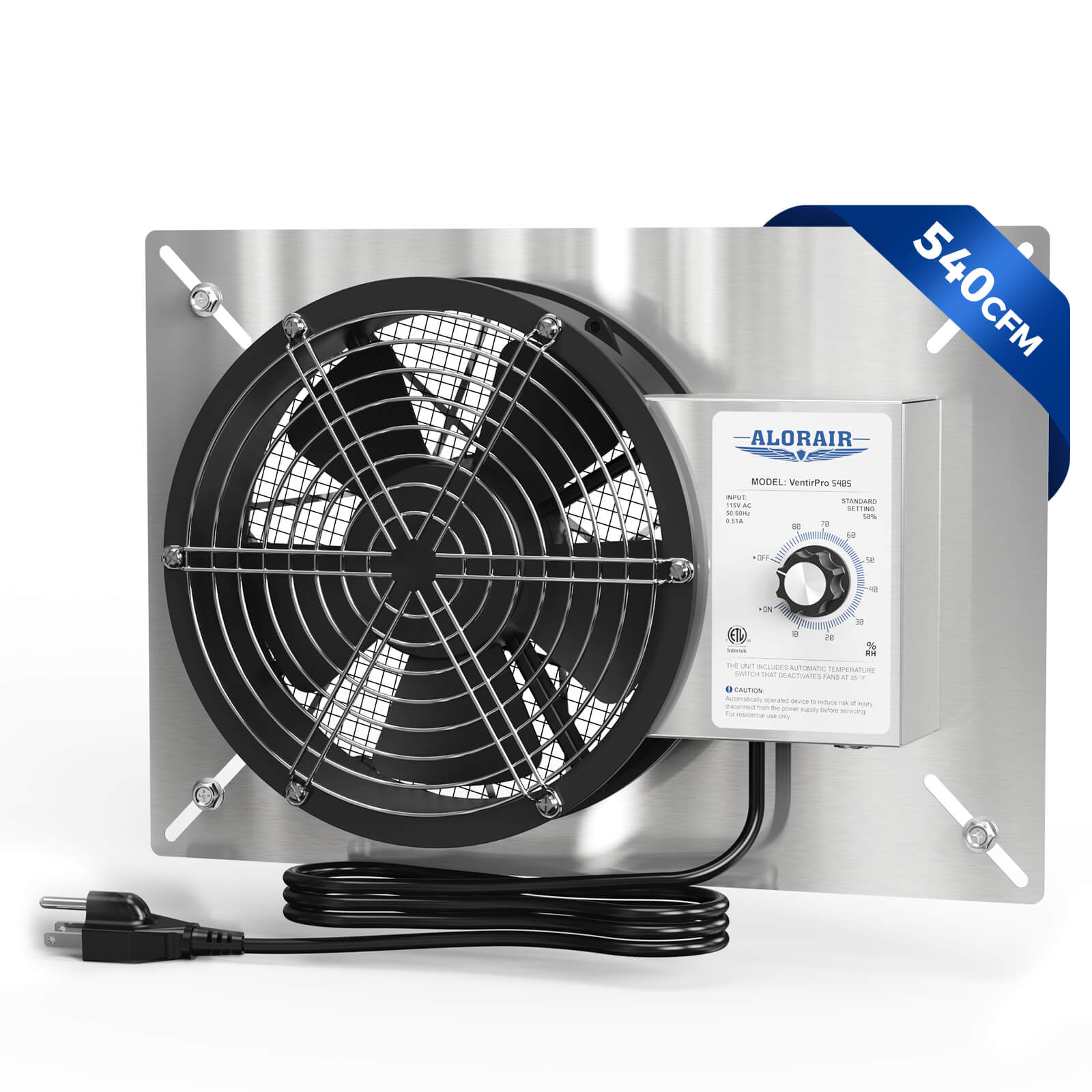
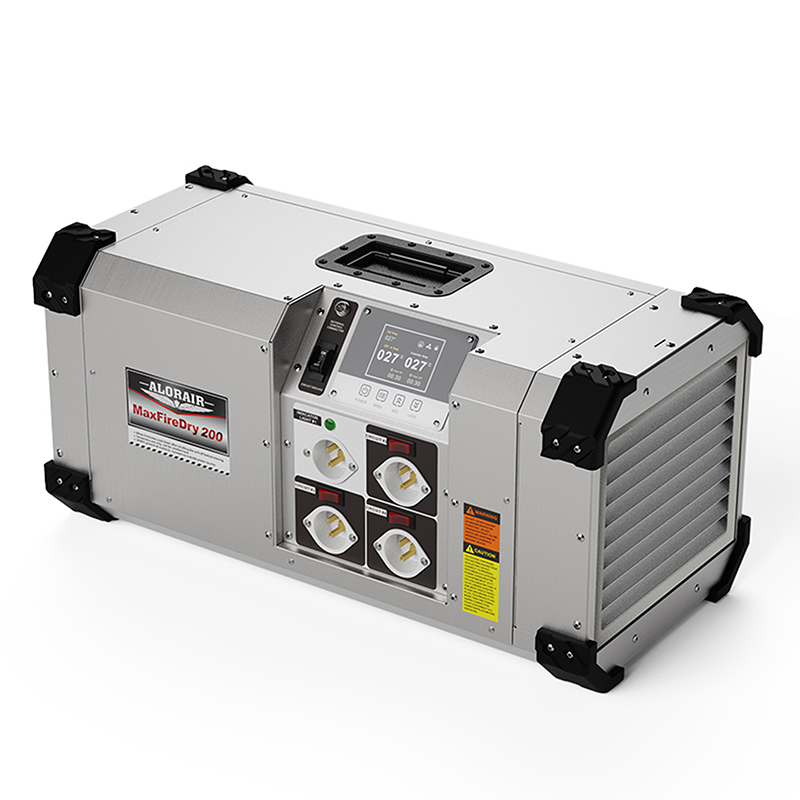
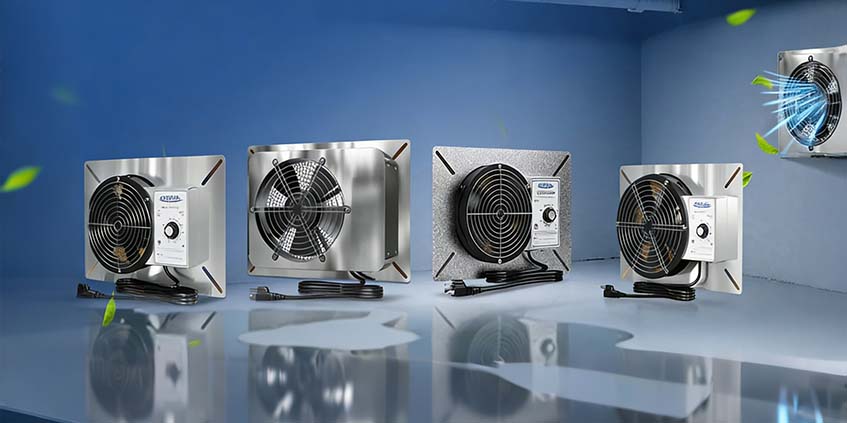
The ventilation fan series engineered by AlorAir is built for balanced air exchange and humidity control in enclosed areas like basements, crawl spaces, and garages. These units concentrate on durable air movement instead of high-speed drying.
Key Features of the Ventilation Fan Series
-
- Aluminum Zinc-Coated Housing: The external body resists corrosion and supports well in humid spaces, a reliable choice for year-round usage.
- Stainless Steel Mounting Frame: The frame maintains the unit protected and stable, even in old structures with rough surfaces.
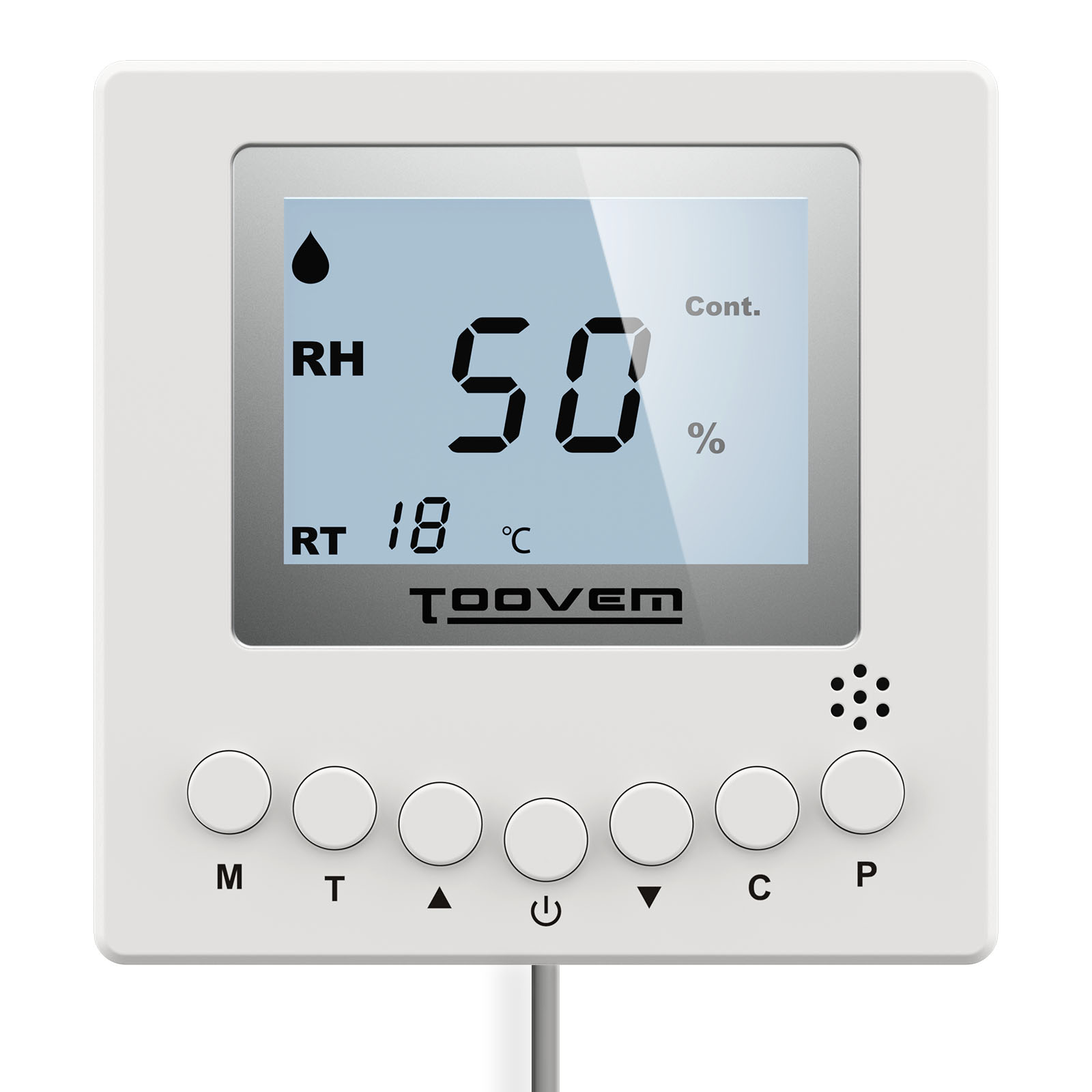
- LCD Multifunction Control Panel: You can observe moisture, temperature, and fan settings at first sight while adjusting the unit with simple controls.
- Multiple Fan Speeds: Controlled air circulation allows users to regulate ventilation depending on routine humidity conditions.
- Built-In Dehumidifier: A few models feature a humidity-removal function, letting them draw in fresh air while reducing dampness at the same time, best for small humid zones.
- Moderate Airflow: Ventilation fans do not push high-velocity air. Rather, they move stable air volume that helps avoid stale pockets and keeps moisture from settling.
AlorAir Blower Series: Built for Fast Drying and High Air Movement
The blower series is devised for restoration tasks, carpet drying, paint curing, and other cases where powerful directional air circulation is required. These units move air strongly and cover bigger sections in less time.
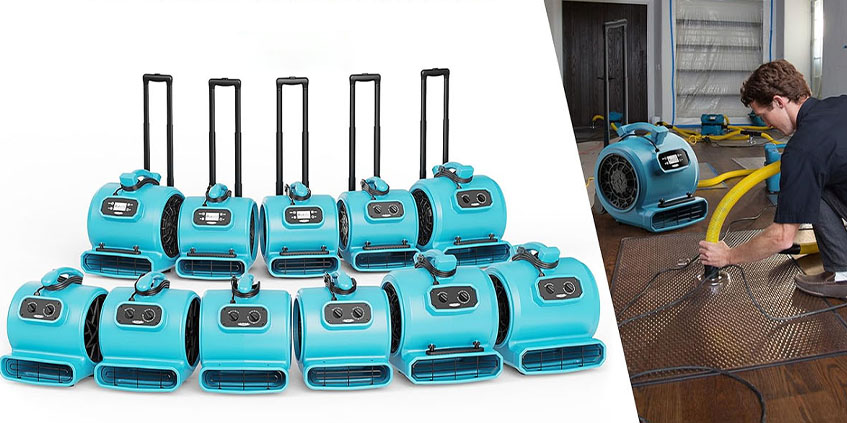
Key Features of the Blower Series
- Roto-Molded LLDPE Housing: The hard, shock-resistant housing manages job-site abuse, high humidity, and frequent movement without cracking.
- High, Whisper-Quiet Airflow: Blowers bring effective output while maintaining surprisingly low noise, which assists during long drying sessions.
- Multi-Angle Adjustments: You can tilt the ALORAIR GE1000A blower to distinct positions (up to 5 angles) to target walls, floors, ceilings, or corners.
- Built-In Timer: The timer simplifies operating the unit for particular durations, which is helpful during overnight drying or unmonitored jobs.
- Pull Rod and Carpet Clips: The pull rod enhances transport between work zones, while the carpet clips hold the flooring elevated for underneath drying.
- GFCI Outlet: The integrated outlet allows contractors to daisy-chain several models safely, accelerating drying in wide spaces. ALORAIR GE1000AT, for instance, features 2 GFCI outlets for wet conditions.
Practical Scenarios: Which One Should You Use?
Selecting between a ventilation fan and a blower fan depends on the piece of work. Here are the typical real-world examples:
- Bathroom odor or mold management: Invest in exhaust fans. They replace damp air with fresh air, blocking moisture on ceilings and walls.
- Carpet drying or flood damage: Use a blower or carpet drying fan. The directed air circulation from a blower fan accelerates evaporation, safeguarding drywall and flooring.
- For garage or crawlspace dampness, use both. Run a ventilation fan for continual ventilation, and install an air mover fan when deep-drying is needed after seasonal humidity or flooding.
In industrial settings and heavy properties, blowers and fans work better together. The fan keeps a healthy airflow, while the blower concentrates on targeted spaces that require powerful air pressure.
Conclusion
Blowers and fans might share one goal, moving air; however, their roles differ. A blower fan delivers strong, concentrated airflow for cooling, drying, or pressurizing, whereas a ventilation fan refreshes air and enhances comfort. Selecting accurately maintains energy costs low and air quality high.
