




-(1).png)
.jpg)
.jpg)
.jpg)
.HDi90.png)
.HD90.png)
.jpg)
.jpg)
.jpg)
.jpg)
.jpg)
.jpg)
.jpg)
.jpg)
.jpg)
.jpg)
.jpg)
.jpg)
.jpg)
.webp)
.webp)
.webp)
.webp)
.jpg)
.jpg)
.jpg)
.jpg)
.jpg)
.jpg)
.jpg)
.jpg)
.jpg)
.jpg)
.jpg)
.jpg)
.jpg)
.jpg)
.jpg)
.jpg)
.jpg)
.jpg)
.jpg)
.jpg)
.jpg)
.jpg)
.jpg)
.jpg)
.jpg)
-.jpg)
.jpg)
.jpg)
.jpg)


















 Exclusive offers
promotions
Exclusive offers
promotions

Indoor air quality matters because people spend the majority of their time indoors in homes, offices, and other buildings, and poor indoor air quality can have an impact on people’s health and comfort. In fact, the U.S. Environmental Protection Agency reports that Americans spend an estimated 90% of their time indoors, where the air can, on occasion, be more contaminated than outside air. As a result, many people look for effective ways to improve the air they breathe.
An air filtration system draws air through filters to remove dust and particles in an entire house or workshop. An air purifier is used to clean the air in a single room, and typically, cleaner filters known as HEPA filters are used to clean the air.
A larger unit, like an Air Scrubber or HEPA air scrubber, may use high-intensity airflow combined with high-efficiency filtration, whereas an air purifier with a HEPA filter targets fine particles in smaller areas. This article will compare these technologies and their uses and benefits so that you can make the correct choice.
What Is an Air Filtration System?
An air filtration system is a device that cleans indoor air by pumping it through air filters. Dust, dirt, and other airborne particles are trapped as the air traverses the system, and clean air is pumped back into space. Most of them are either built into HVAC units or linked via duct airflow systems that enable air to enter and exit many rooms. This makes them particularly practical for large areas where air transfers throughout the building.
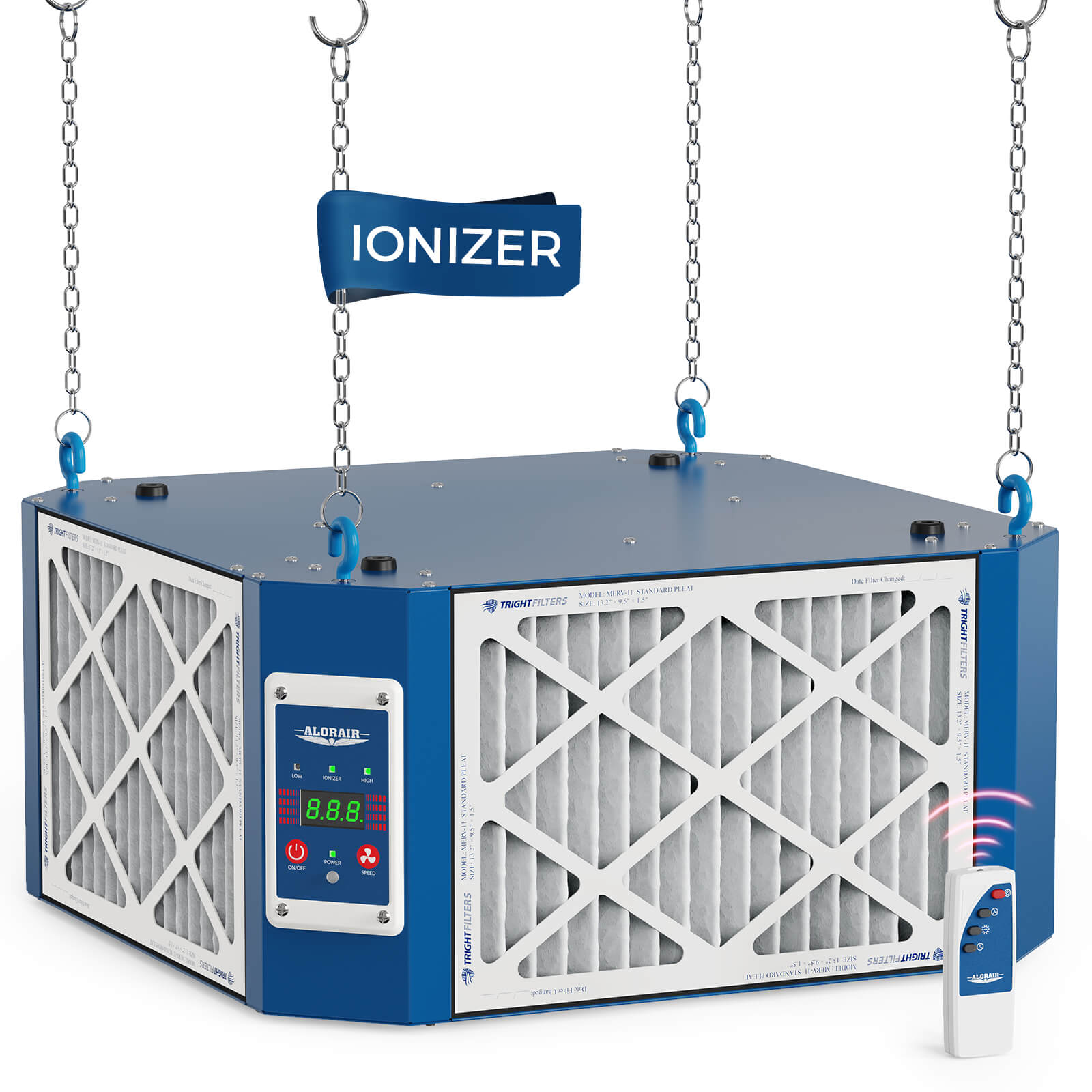
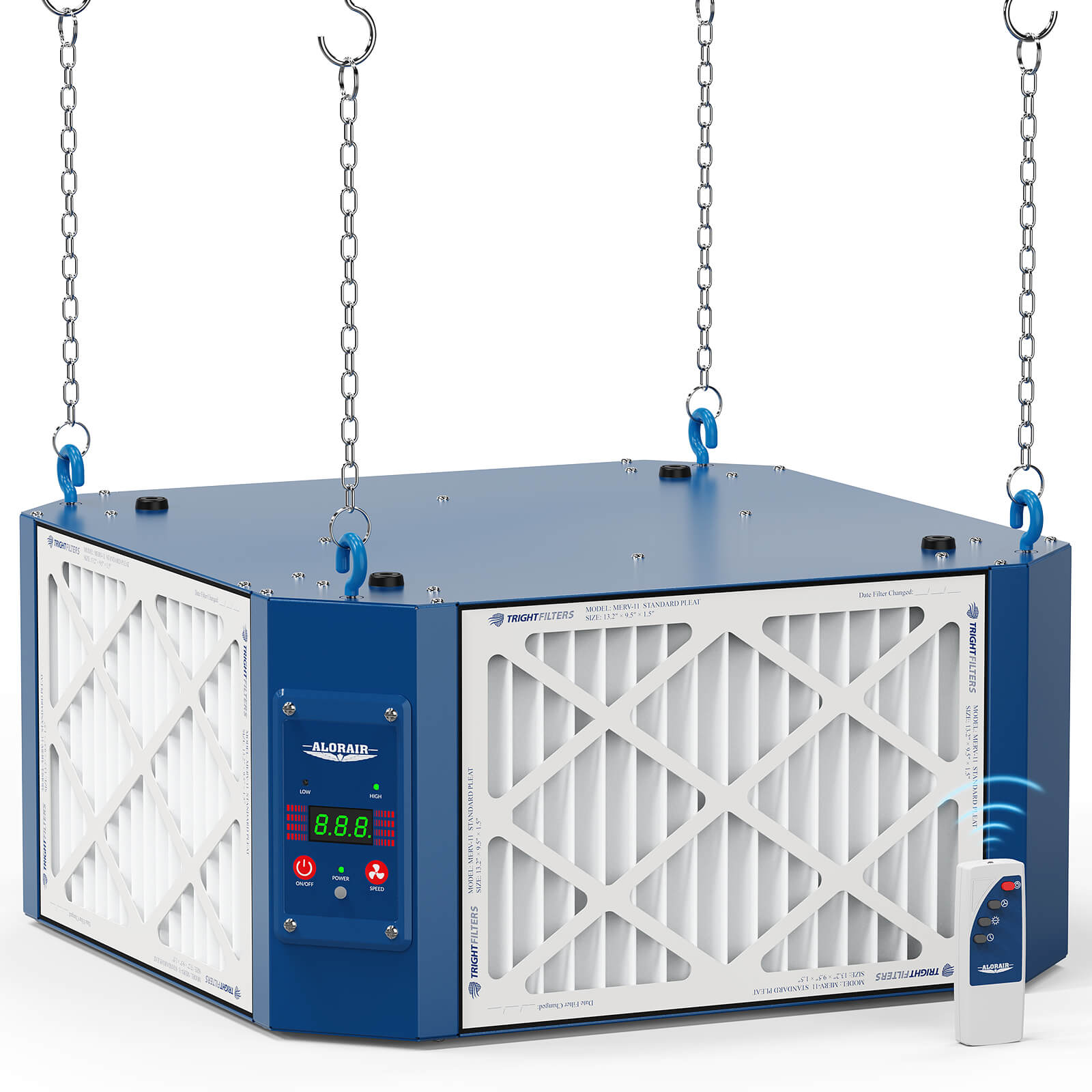
A home air filtration system is often installed with a home’s HVAC system in order to provide whole-house air cleaning capabilities. In work environments, however, woodshop air filtration and workshop air filter systems are designed to handle heavier dust from cutting, sanding, and other tool use. These systems focus on capturing fine particles that remain suspended in the air for extended periods.
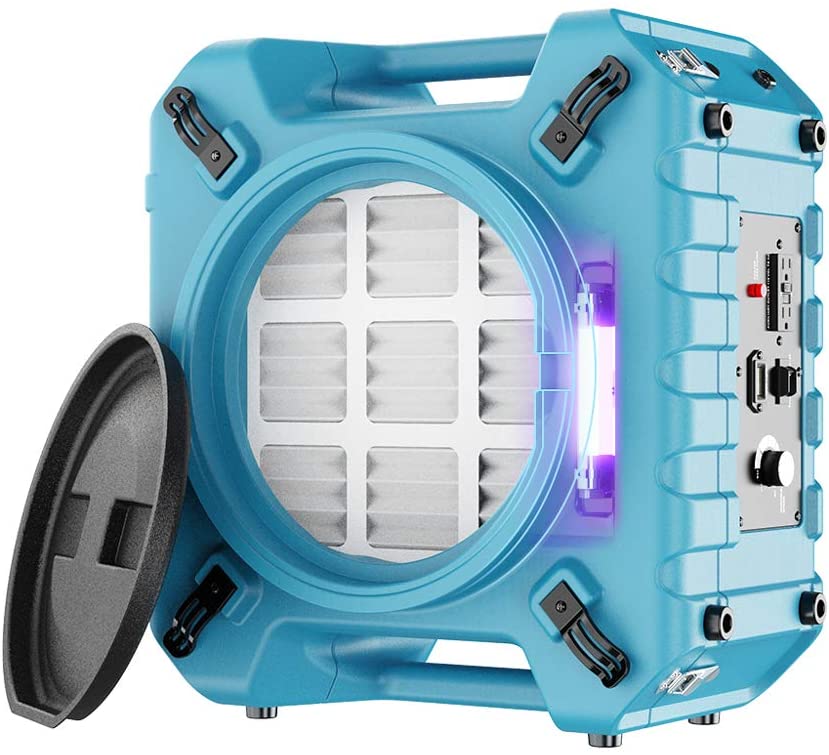
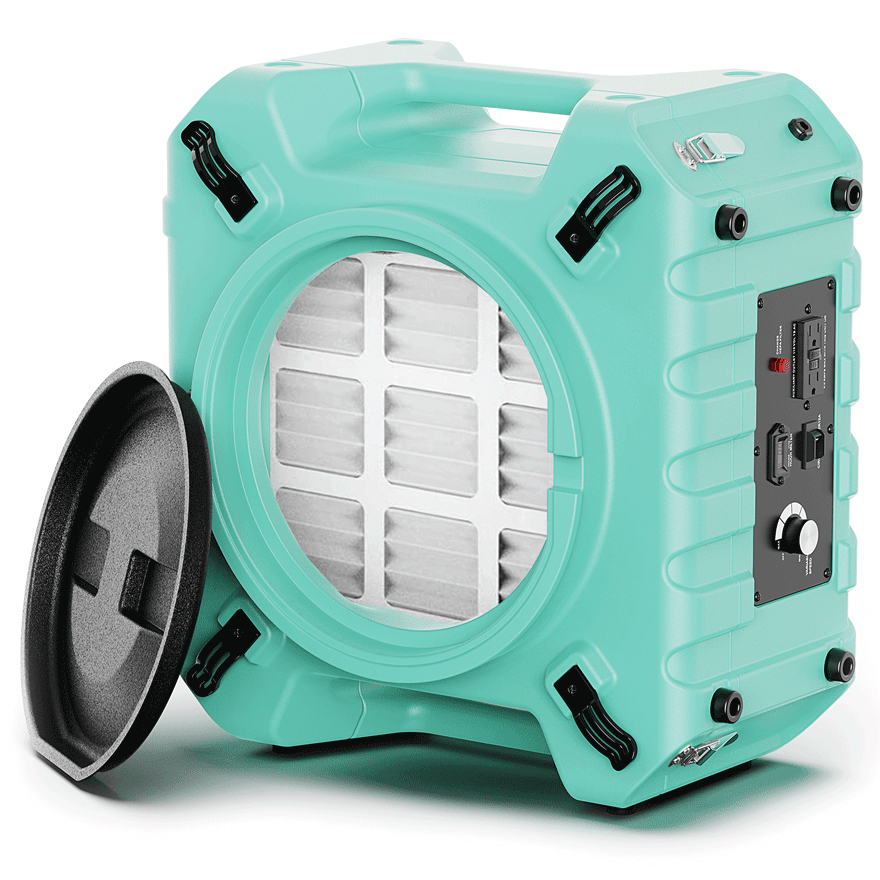
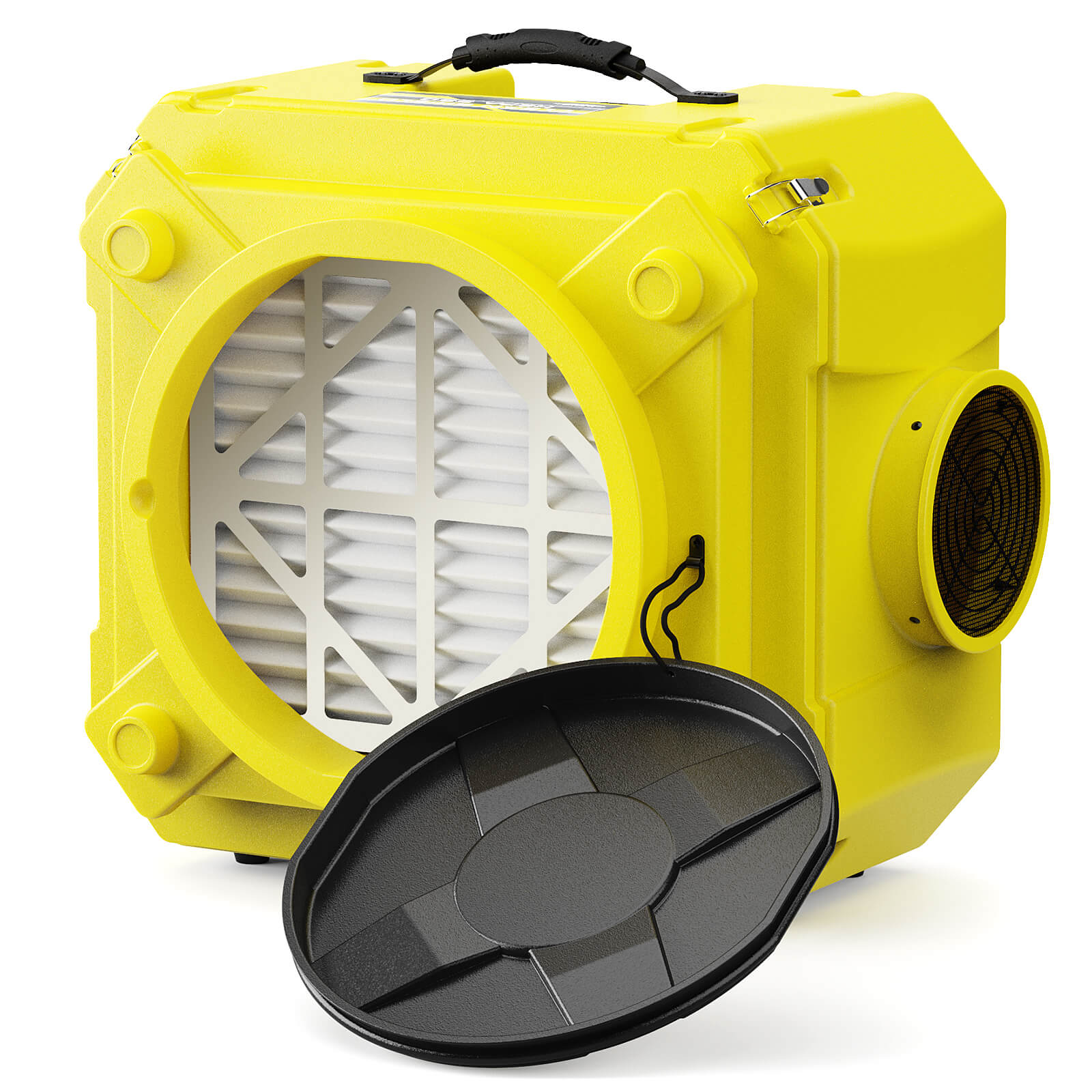
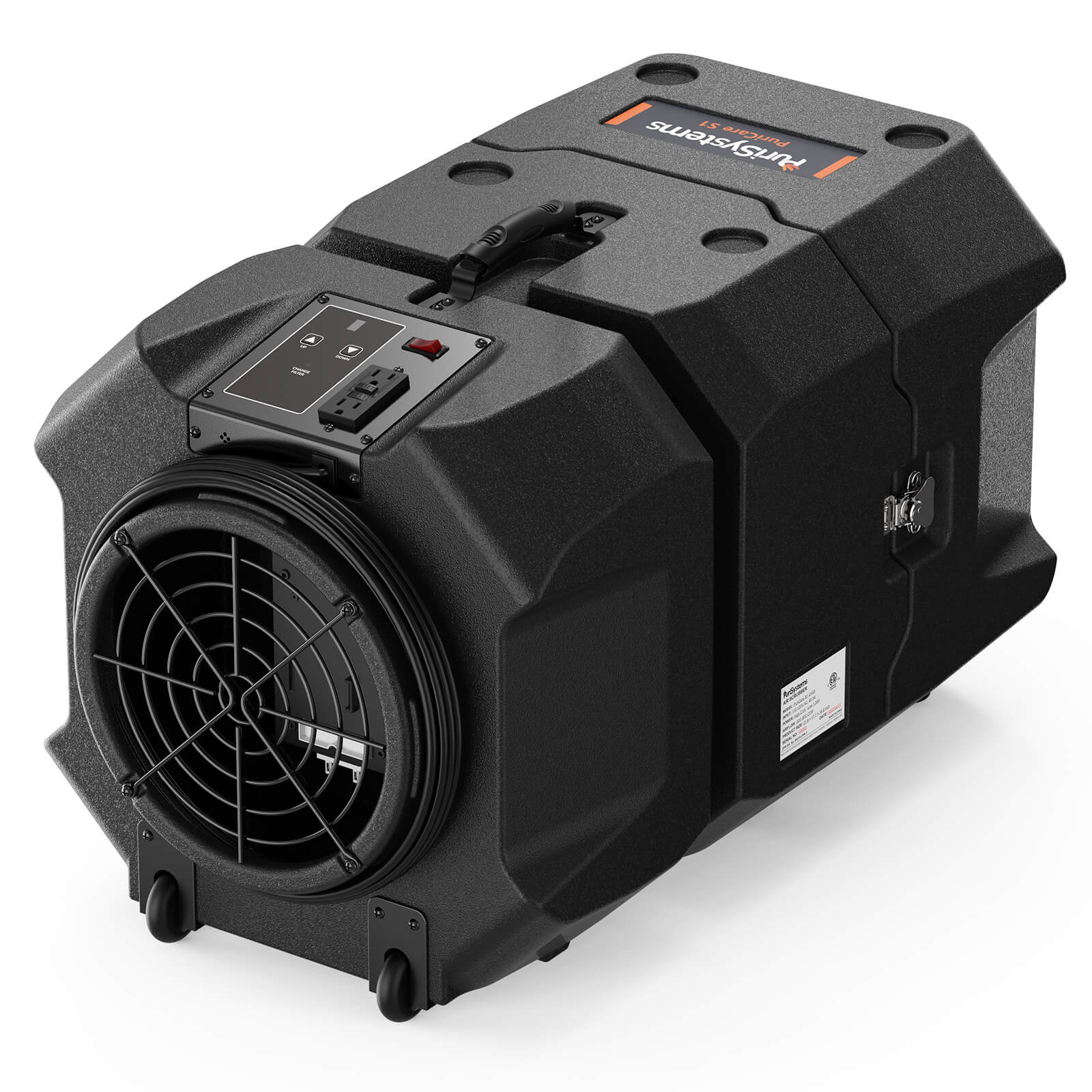
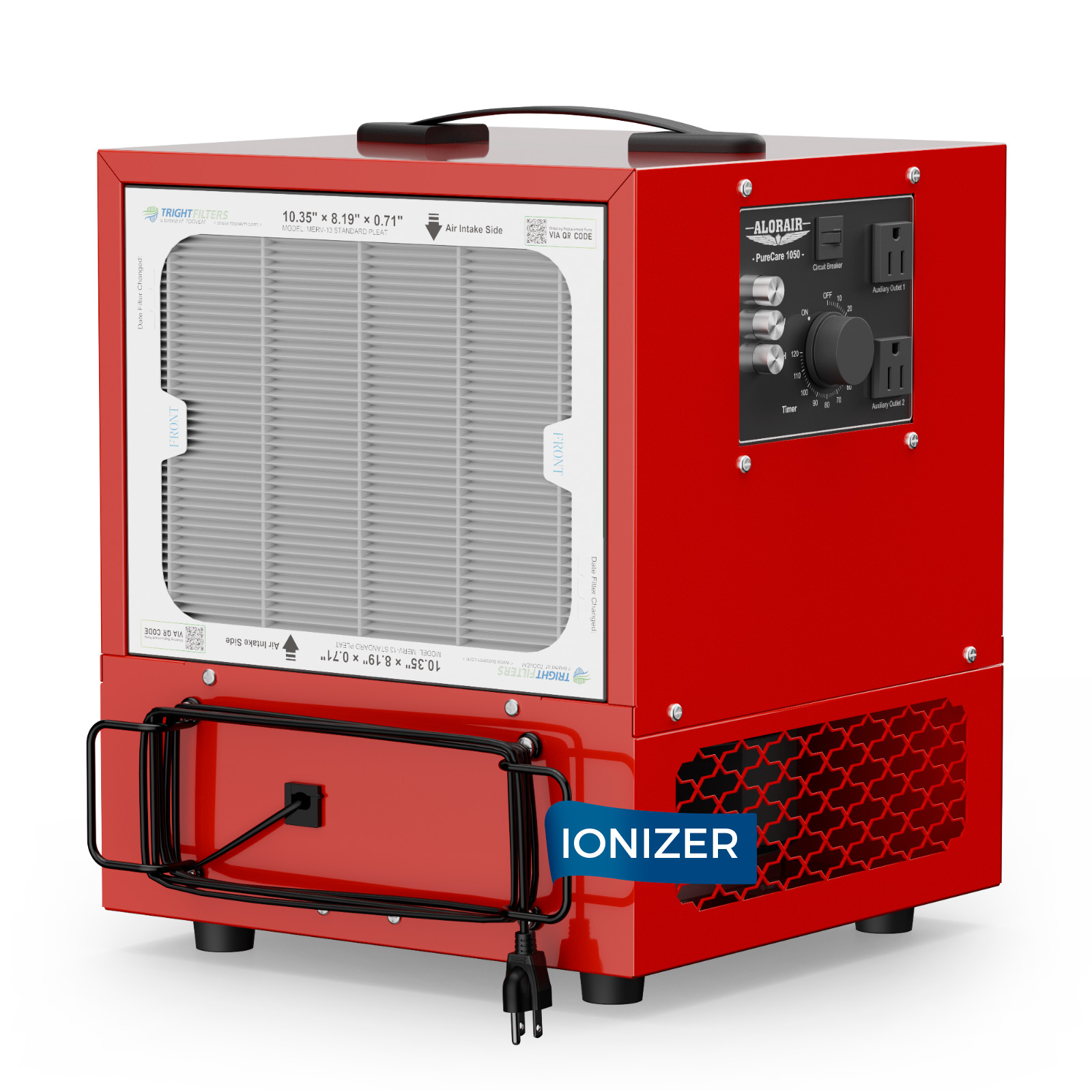
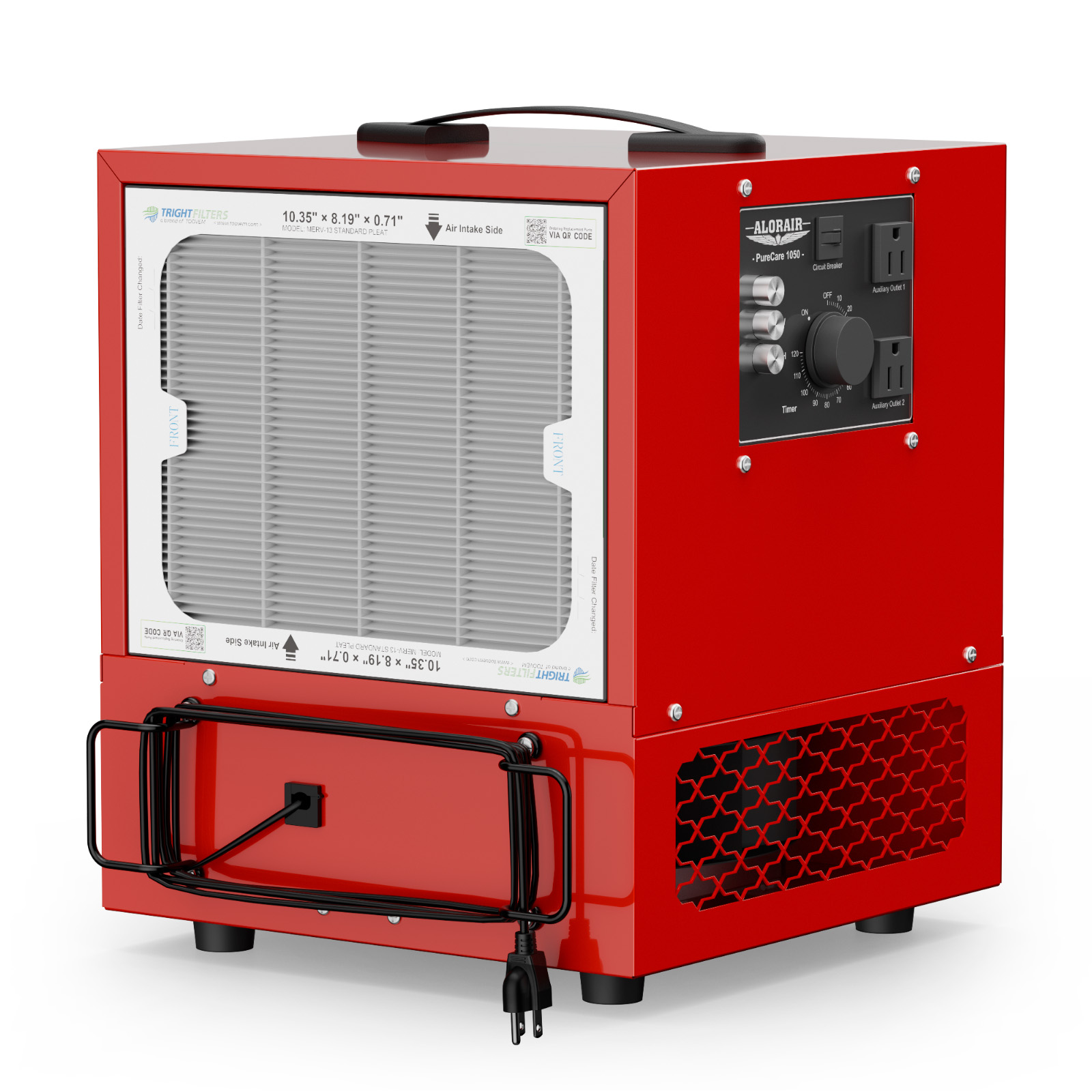
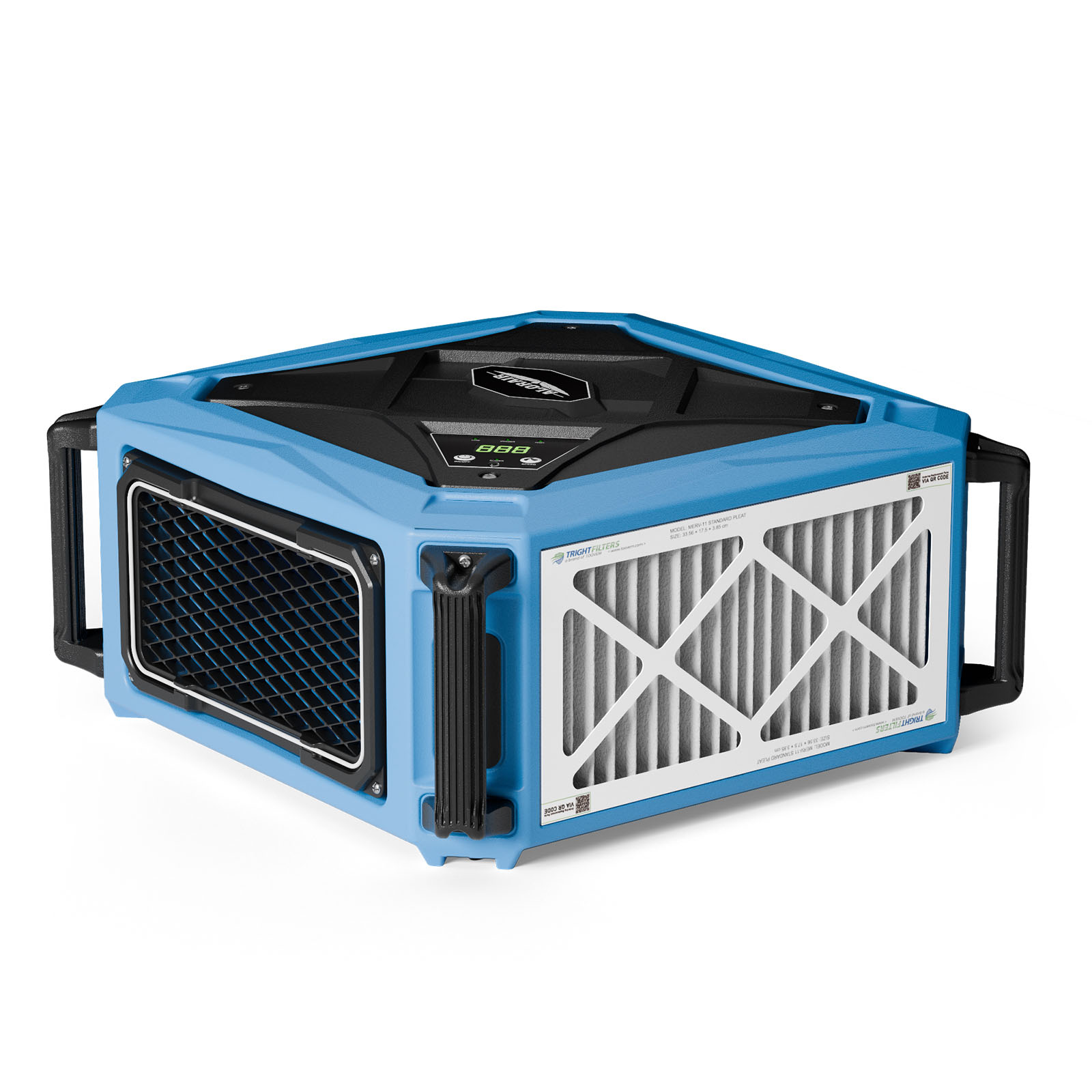
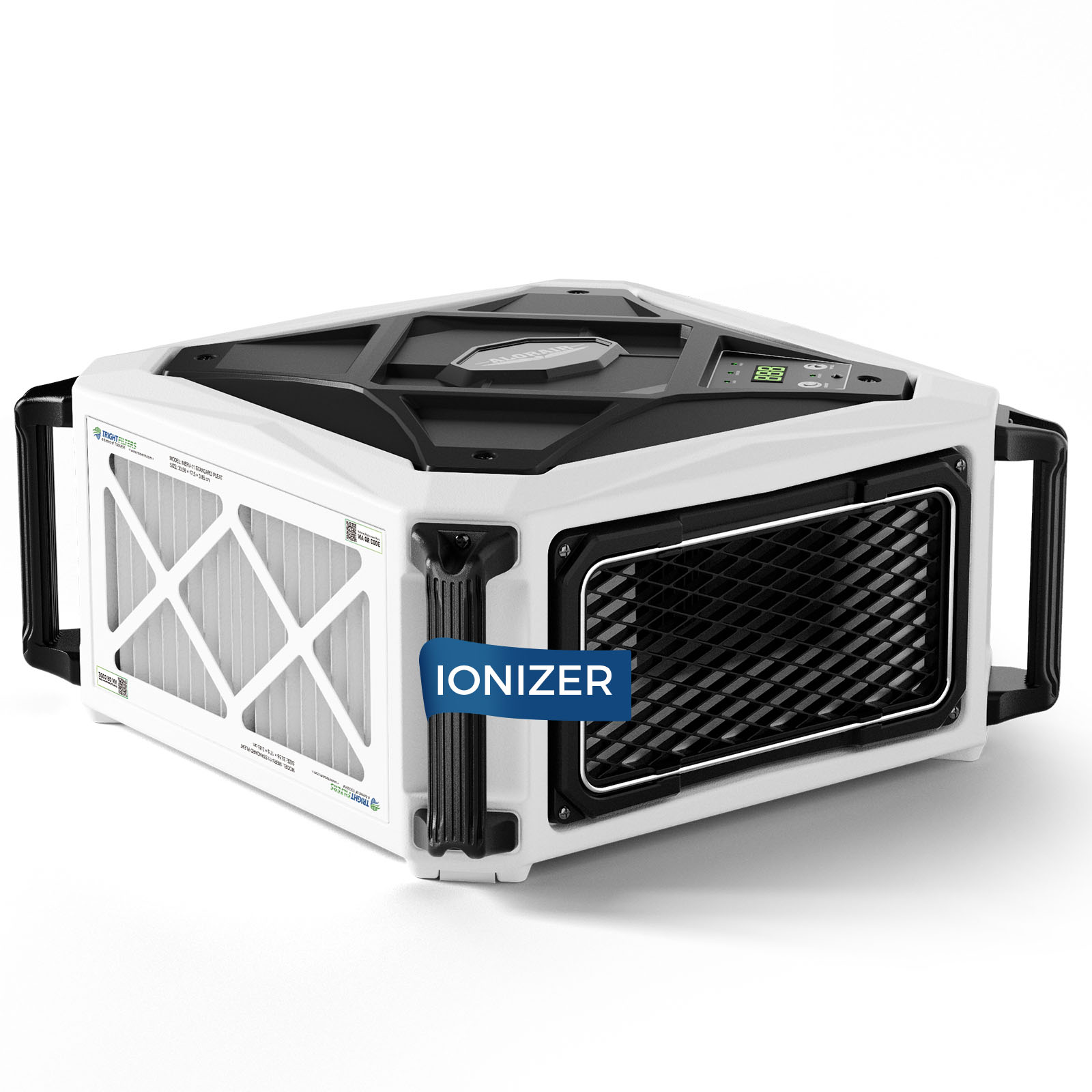
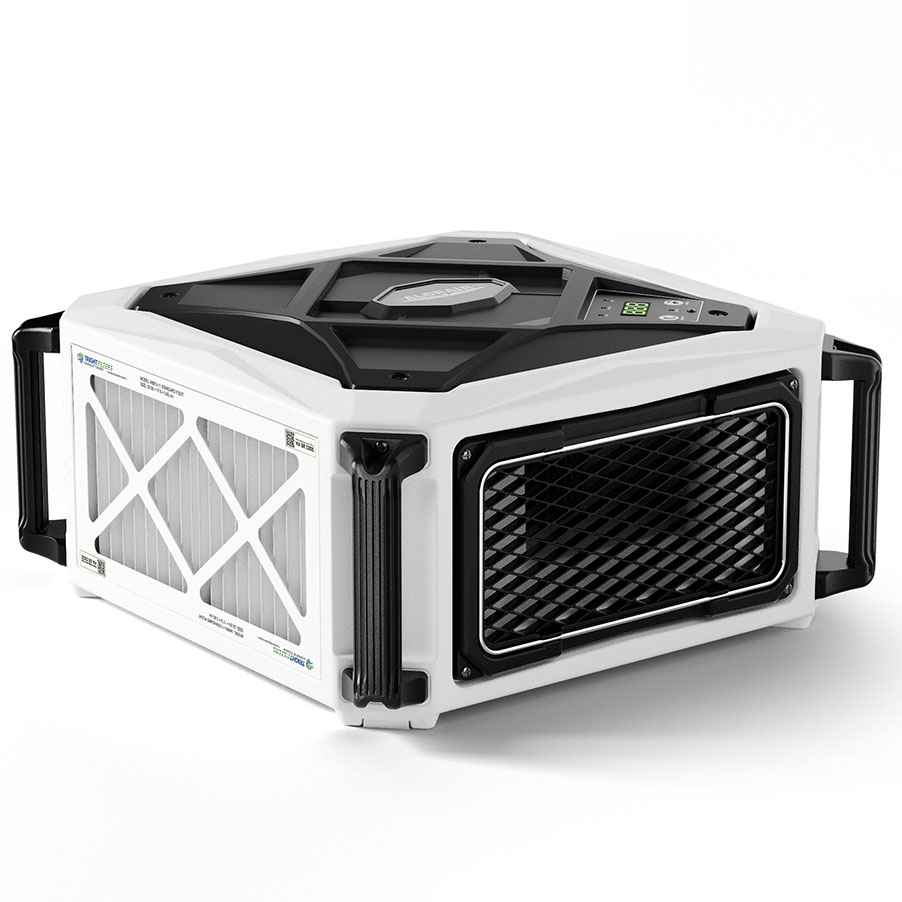
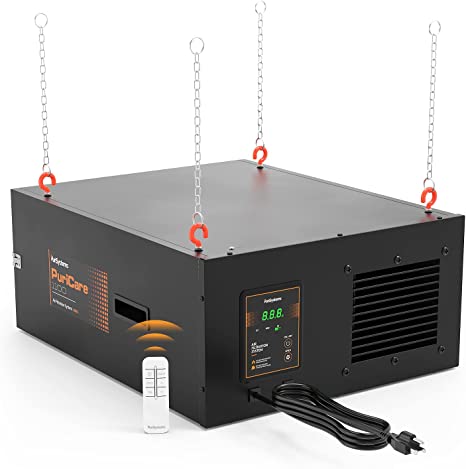
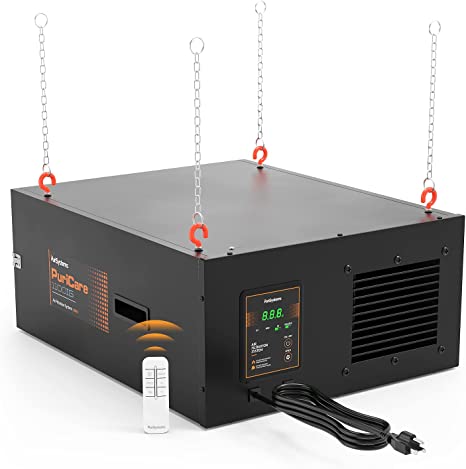
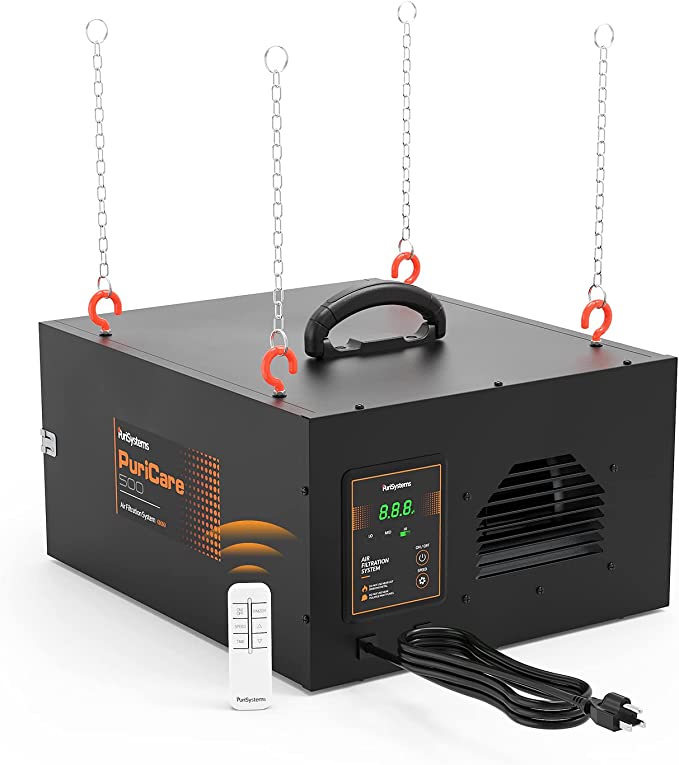
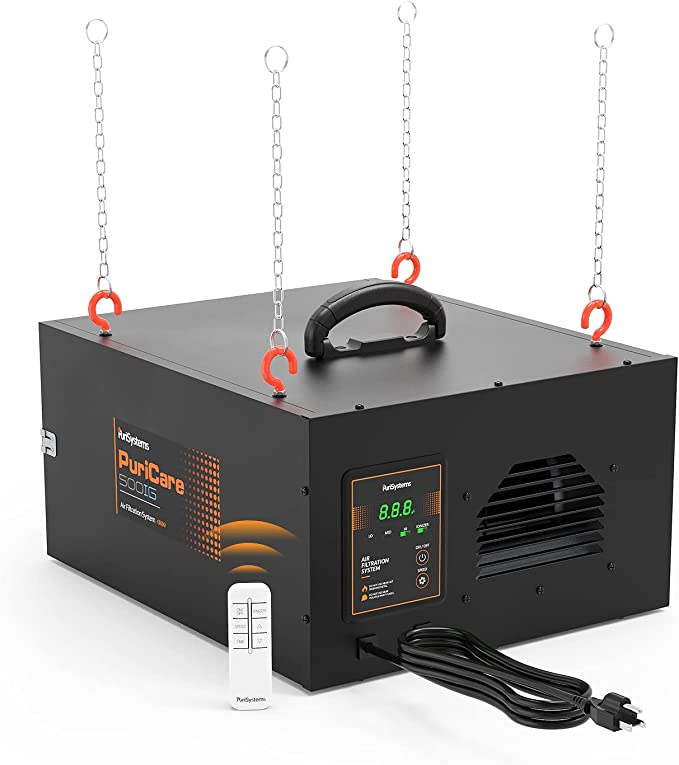
In woodworking and fabrication environments, high CFM ceiling-mounted units are generally used to remove fine airborne dust missed by dust collection systems. For example, systems such as the AlorAir Purecare 1050IG are for continuous circulation and filtration of air in medium to large workshops.
Most air filtration systems contain mechanical filters for trapping the particulate solids. Many contain activated carbon filters to reduce odors and gas, as well as pre-filters to catch larger debris to help extend the life of the main filter.
What Is an Air Purifier?
An air purifier is designed to clean a single room or enclosed space. It draws air from the surrounding room, filters out unwanted particles, and pushes the cleaned air back into the same room. This makes air purifiers a popular choice for bedrooms, offices, and small living spaces where people want to quickly and locally clean the air.
One type of air purifier with a strong ability to trap extremely small particles is a HEPA-filtered model. HEPA filters are well known for their ability to collect fine particles to improve breathing and comfort. Some air purifiers also incorporate other technologies, such as ionization or ultraviolet-C light. These features may have the advantage of reducing odors or microorganisms, but make HEPA filtration the principal means of particle removal.
Most air purifiers are portable and simple to transport from one room to another. Unlike built-in air filtration systems, they are not connected to ductwork and do not clean air throughout an entire home/ workshop.
What is an Air Scrubber?
An air scrubber is a more general category of air cleaning equipment that is designed for more challenging environments and bigger volumes of air. Unlike the small room purifiers, air scrubbers are designed to move large quantities of air and remove heavy concentrations of airborne particles. They are often used when the air quality requires fast and powerful improvement.
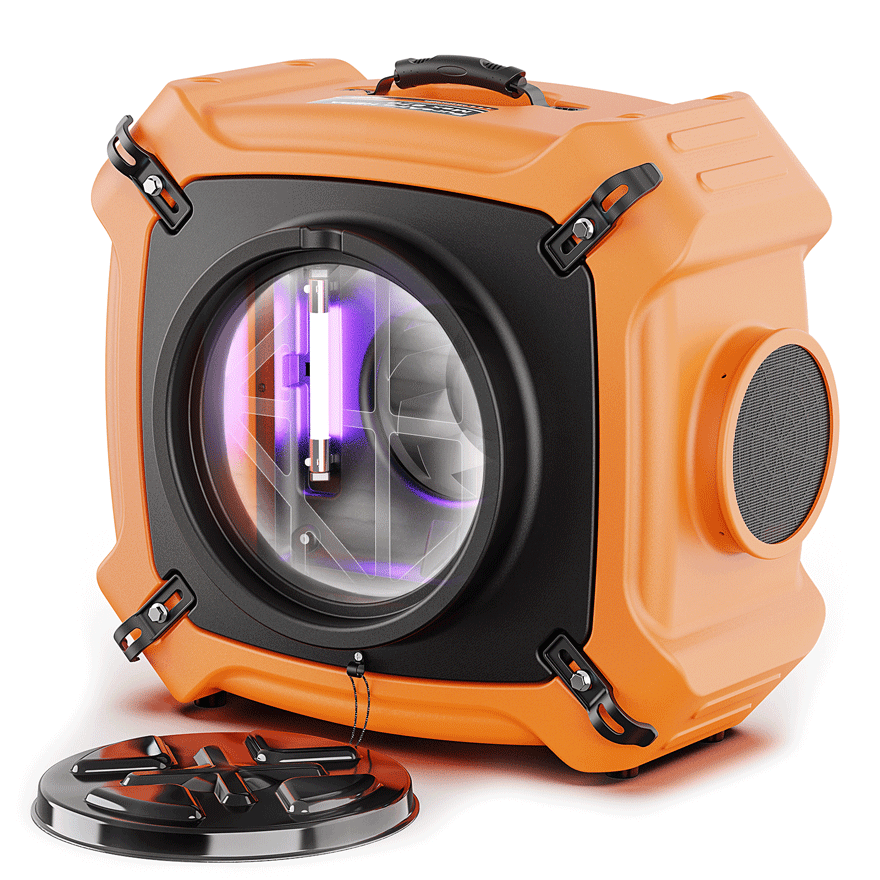
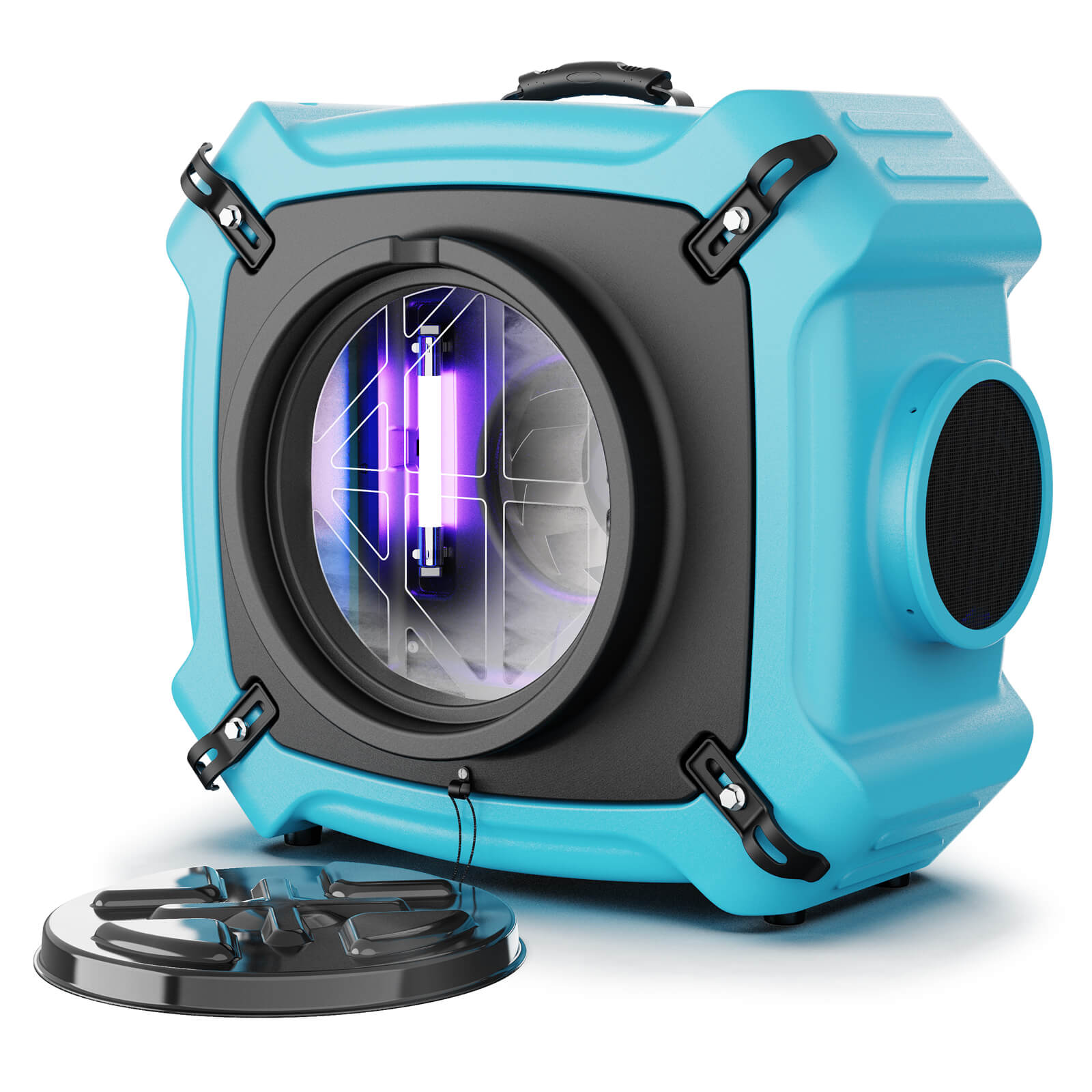
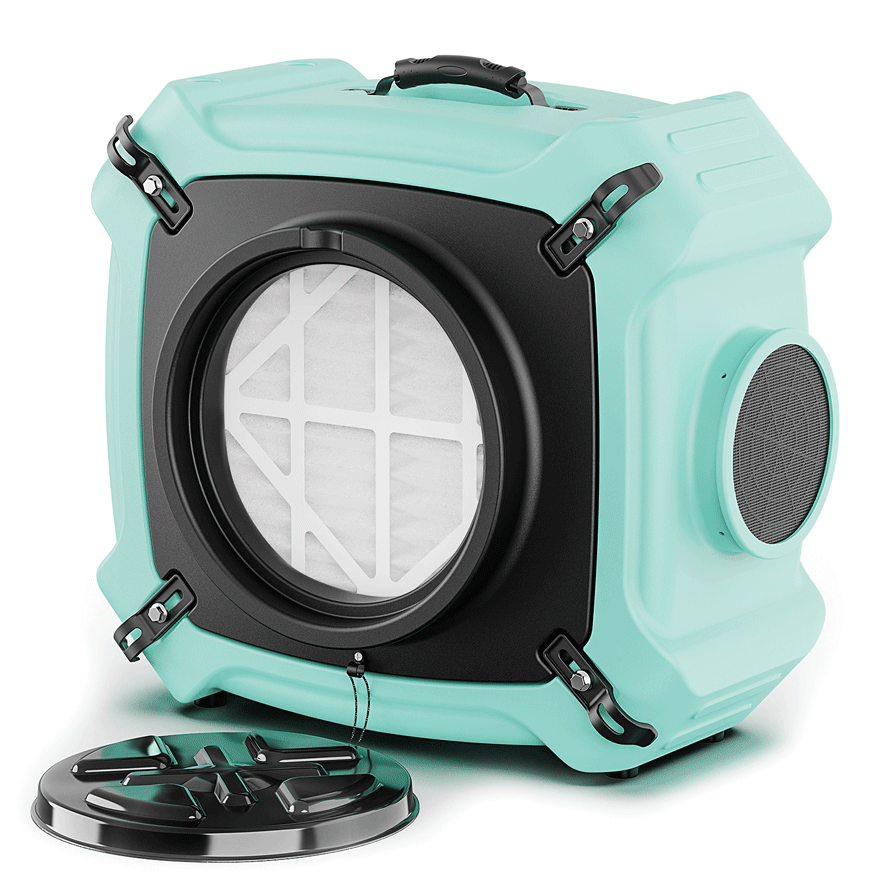
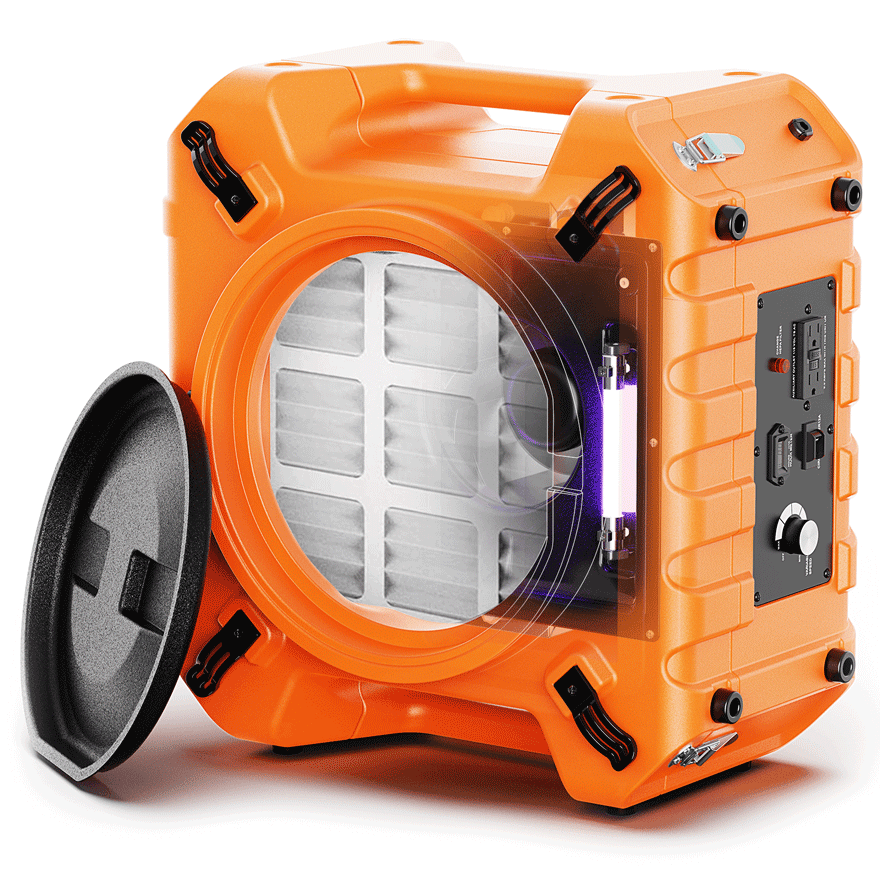
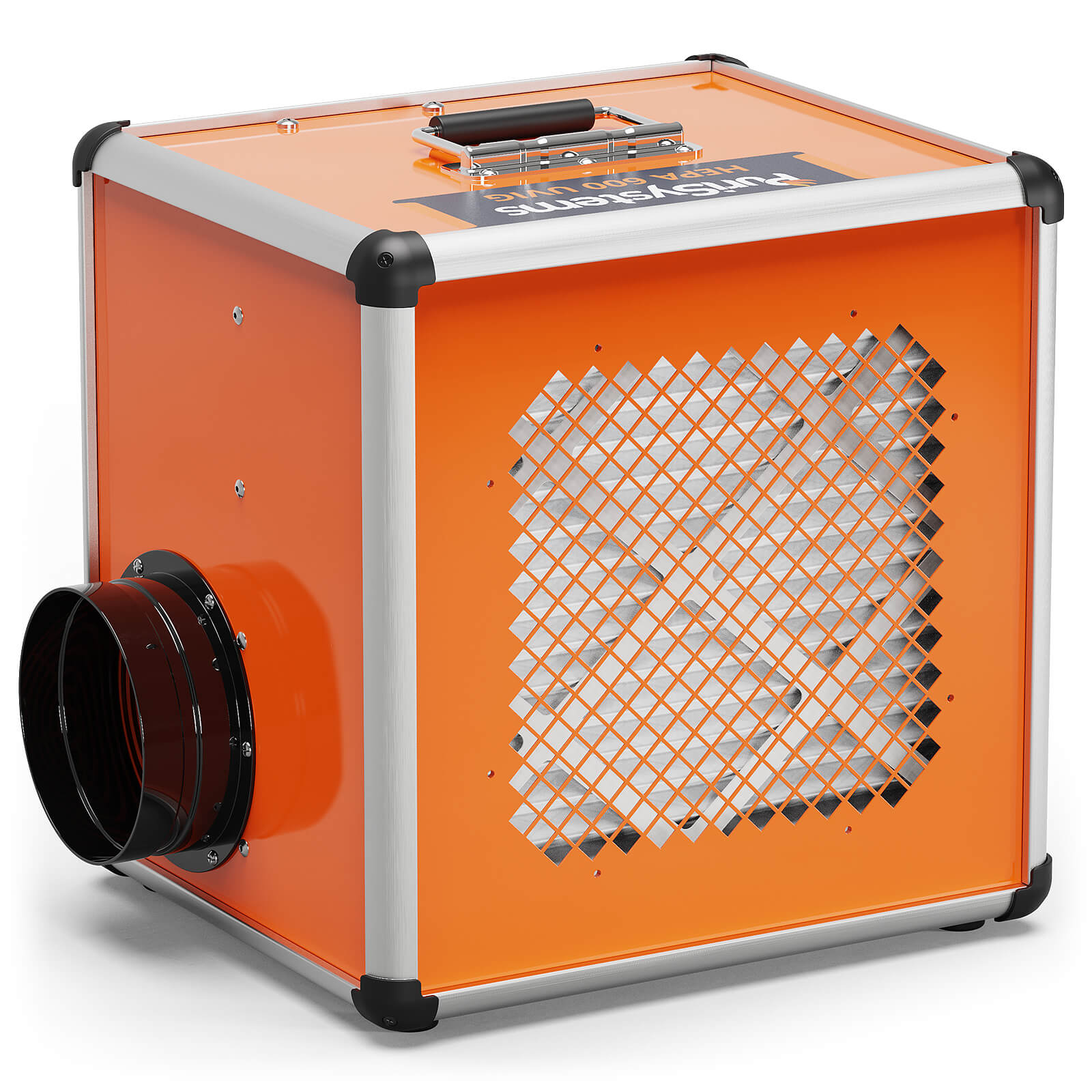
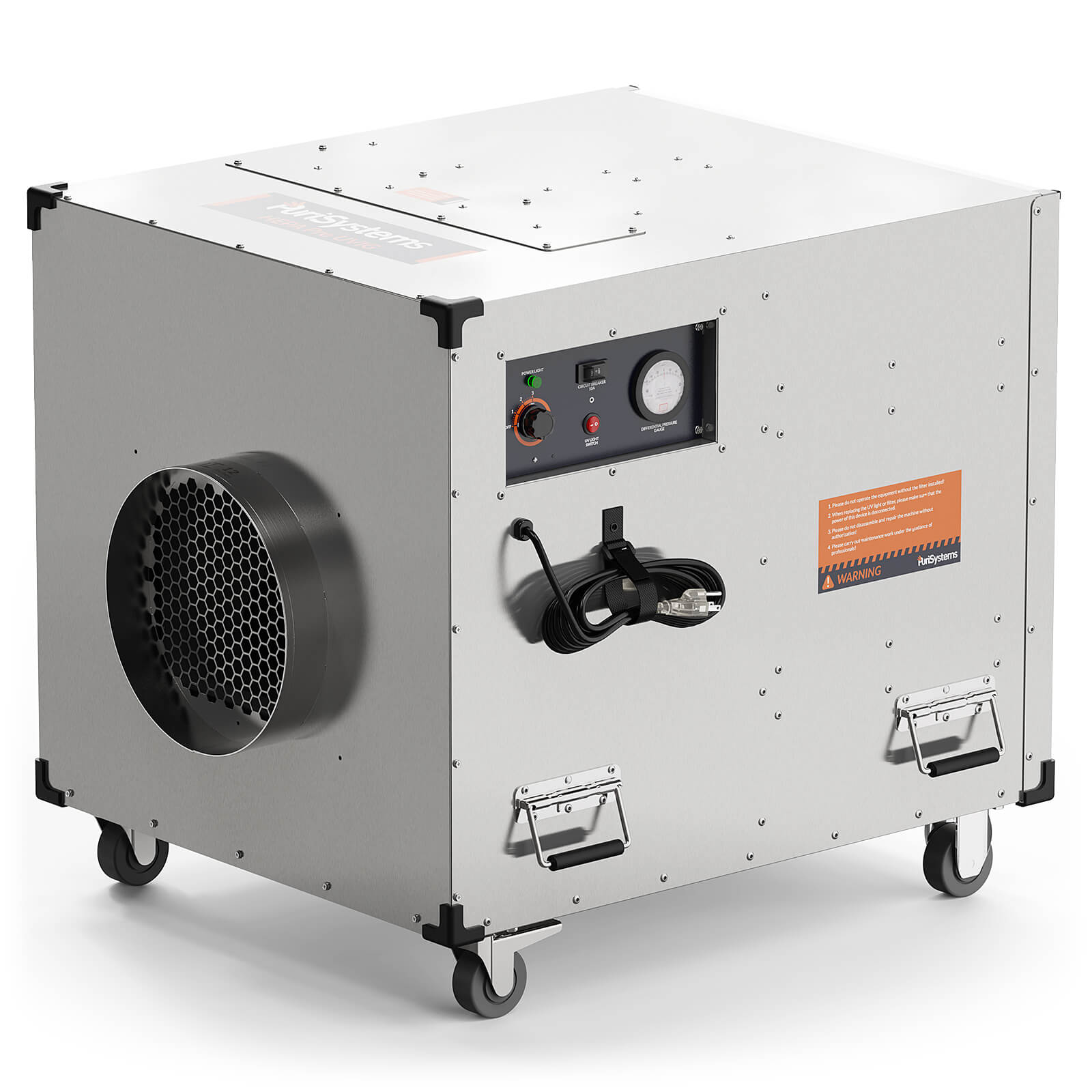
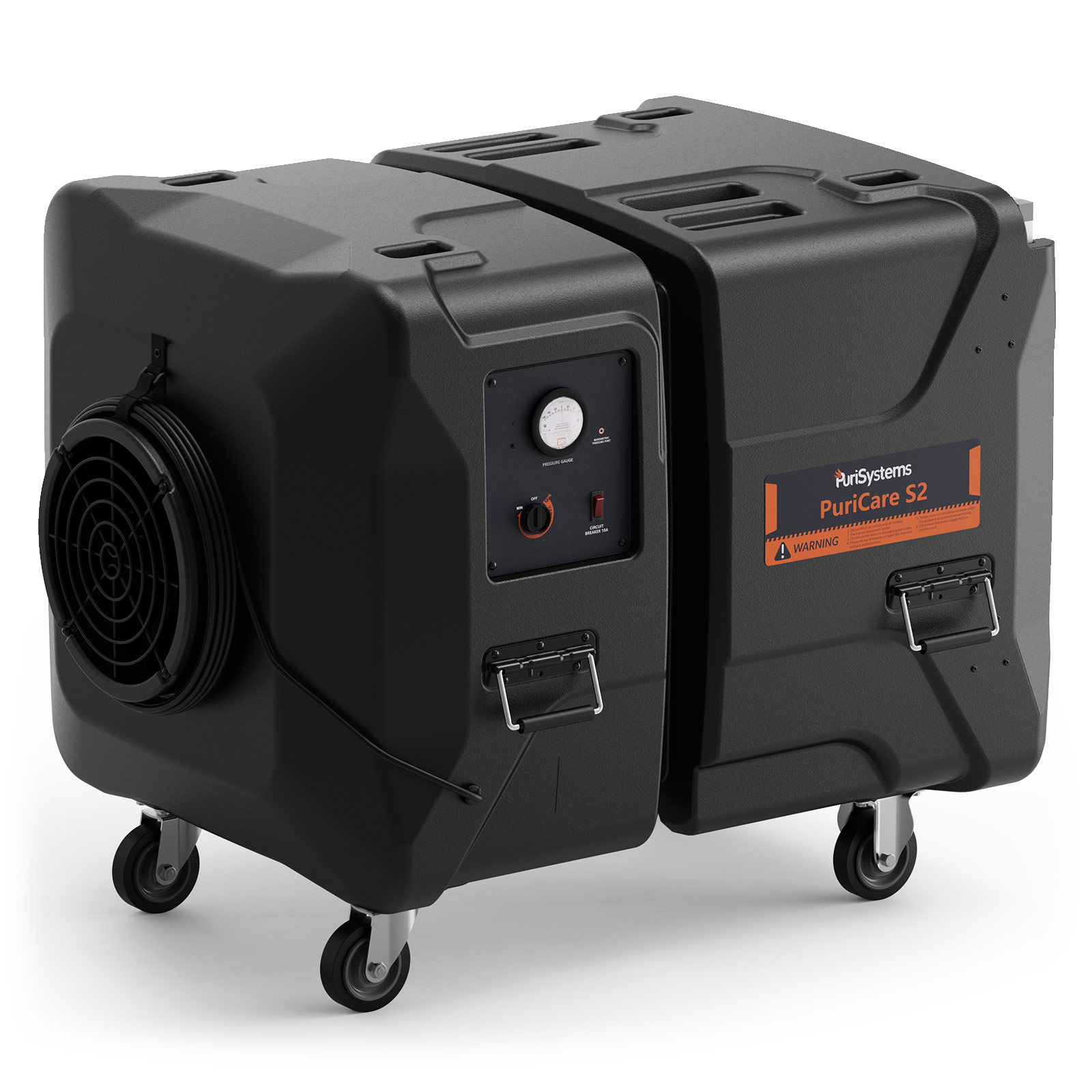
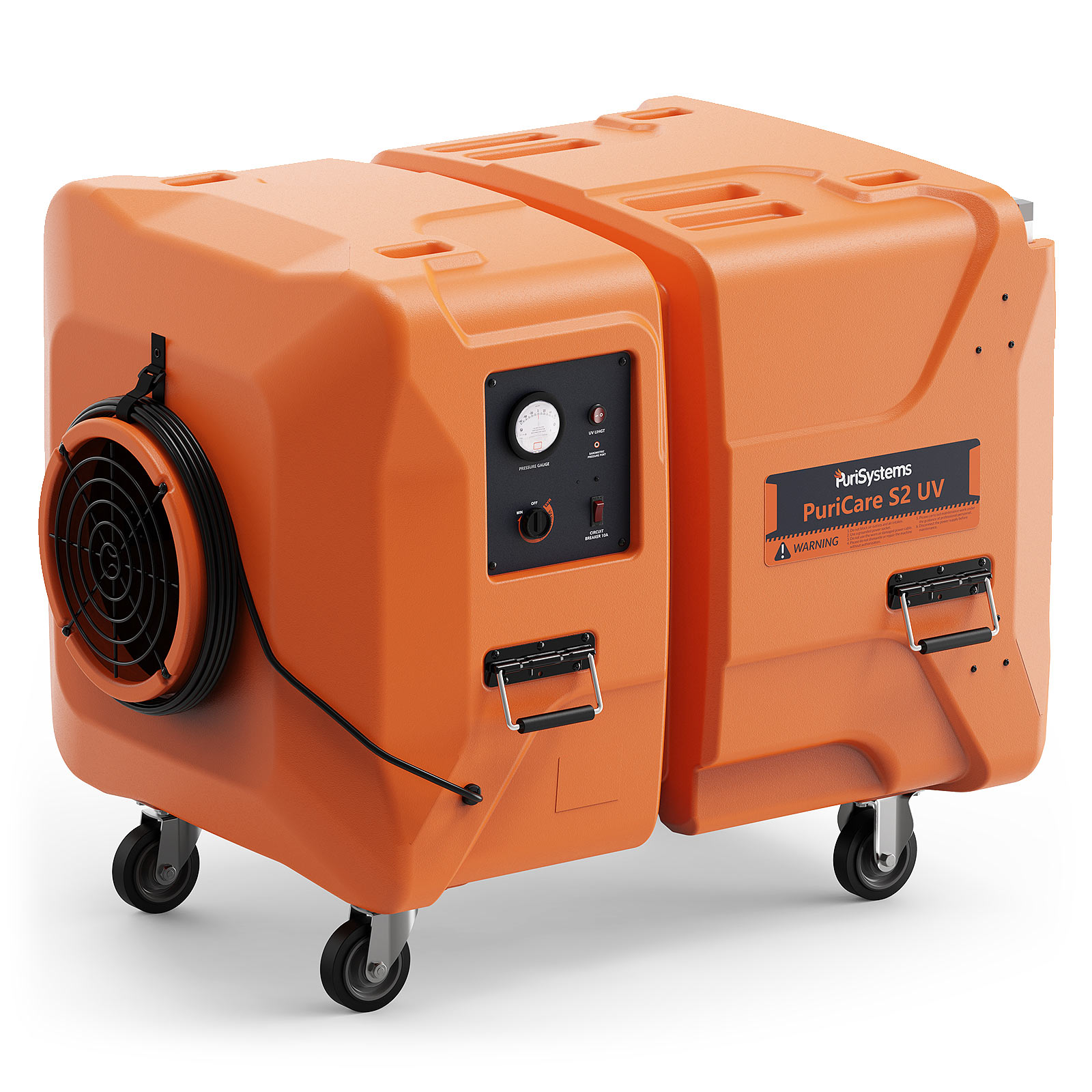
A Hepa air scrubber uses industrial-strength air flow combined with a HEPA filter for capturing very small particles. These systems are typically used in construction projects, mold remediation, disaster cleanup, and in commercial spaces where dust, debris, or contaminants are present. They are also useful in workshops and job sites where normal air purifiers cannot deliver enough power.
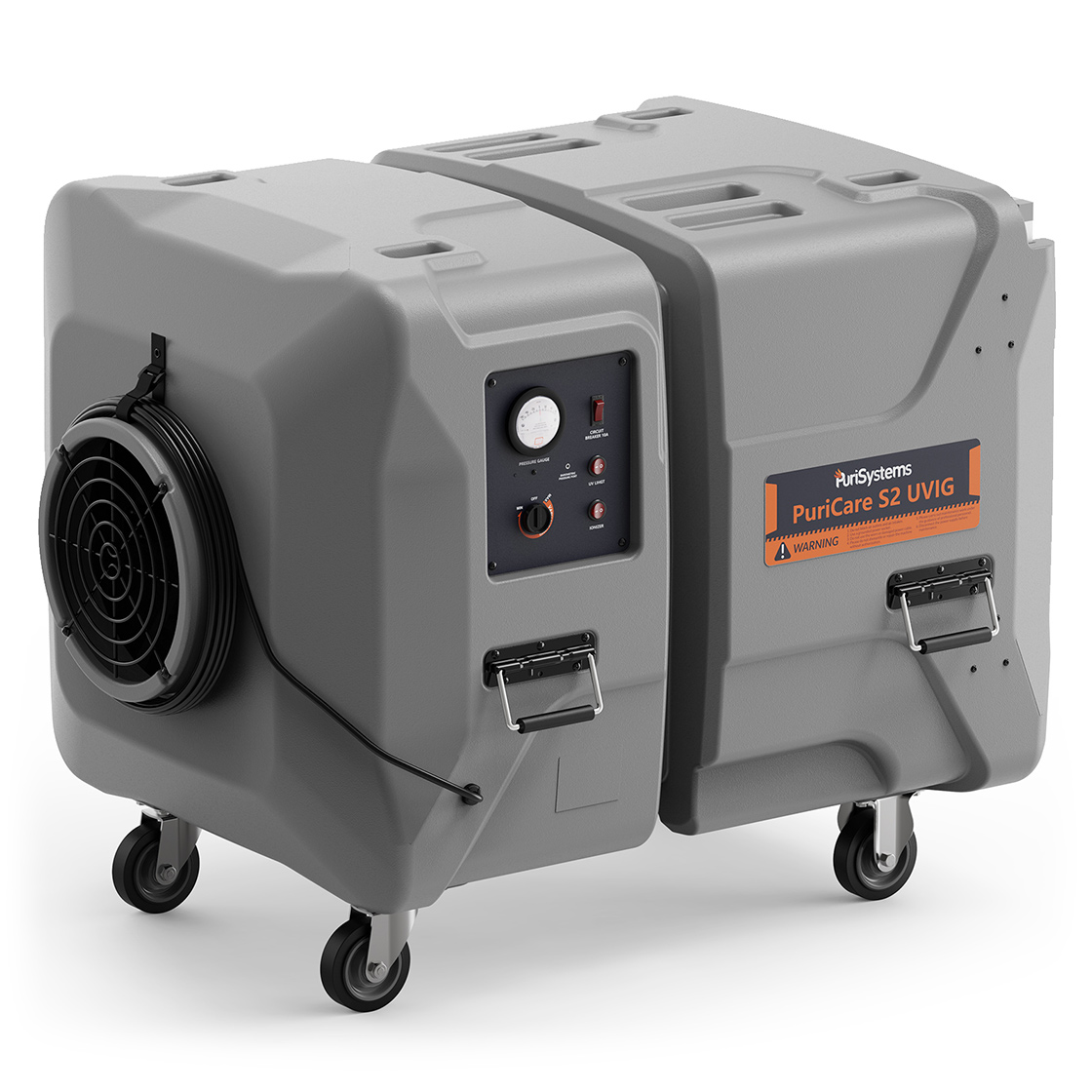
For remediation and construction work, HEPA air scrubbers have the benefit of rapid air turnover and containment. Models such as the AlorAir PureAiro HEPA Max 970, which handles airflow up to 750 CFM, and multi-stage HEPA filtration are generally utilized on renovation sites, mold remediation projects, and commercial jobs where control of airborne particles is quickly necessary.
What is The Difference Between An Air Filtration System and Air Purifier
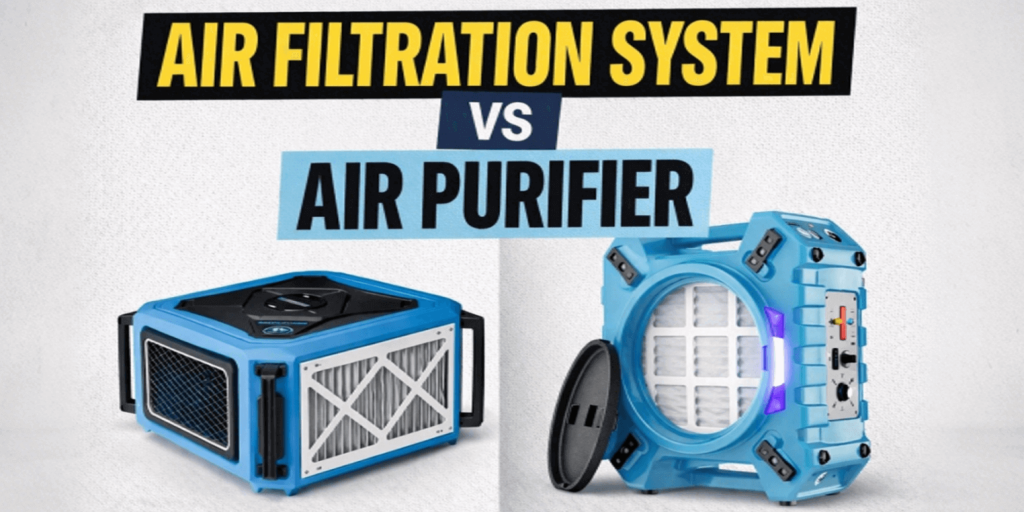
The decision between an air filtration system vs an air purifier depends upon the size of the space, air quality requirements, and usage of the system. While the two share a goal of improving indoor air, they operate differently and serve different purposes.
Coverage Area
An air filtration system is intended to be used for large areas. While a home air filtration system is suitable for cleaning the air in a whole house via use of ductwork, a woodshop air filtration system and a workshop air filter system are available for large workspaces. An air purifier, on the other hand, is designed for a single room or for a small area at any given time.
Filtration Strength
Air filtration systems often utilize several filtration stages to deal with heavy-duty dust and continual air currents. Air purifiers, particularly an air purifier with a HEPA filter, are great at trapping small particles but may not work as well in a high-dust environment without changing air purifier filters frequently.
Installation
Air filtration systems typically are fixed in place and can be connected to an HVAC system or installed in workshops. Air purifiers are portable and do not require any installation other than plugging them in.
Typical Usage
Air filtration systems are found in ordinary residences, workshops, and commercial areas where the air is in continuous motion. Air purifiers are ideal for bedrooms, offices, and small living areas.
Maintenance and Cost
The filtration systems can be a little expensive to set up, but they have long-term coverage. Air purifiers are cheaper to buy, but they may need to be replaced more often.
|
Feature |
Air Filtration System |
Air Purifier |
|
Coverage |
Whole home or workshop |
Single room |
|
Strength |
Handles heavy dust |
Best for fine particles |
|
Installation |
Fixed or ducted |
Portable |
|
Common Use |
Homes, workshops |
Bedrooms, offices |
|
Example Types |
Woodshop air filtration |
Air purifier with HEPA |
When to Choose an Air Filtration System
An air filtration system would be the right option for large spaces where air is moved all the time. It works best when integrated with an HVAC system or a fixed unit in a work area. Such systems are designed to withstand heavy dust and work for a long time without losing their efficiency. Garages, workshops, studios, and other active areas provide good benefits from high air flow and multi-stage filtration. If dust, debris, or particles are to be cleaned in a large process area, a complete air filtration system is more consistent and reliable than portable options in helping to clean the air.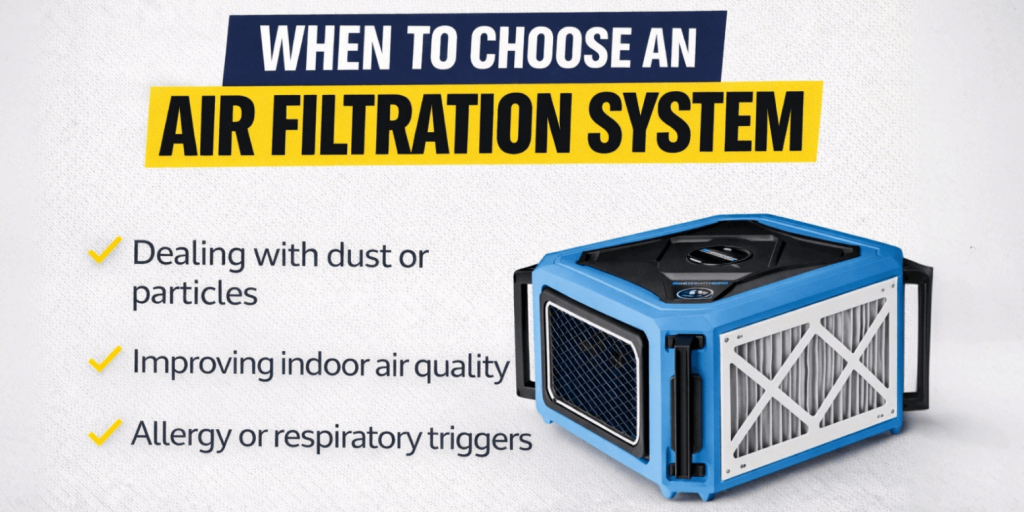 When To Have an Air Purifier
The best choice for an indoor air purifier is an air purifier for smaller rooms where people spend most of their time. Examples include bedrooms, apartments, and offices. These units are useful to people with allergies or breathing sensitivities because they focus on ultrafine particles such as pollen, dust, and smoke. Air purifiers are easy to move, require no installation, and work immediately. If air quality concerns are restricted to one room and there is no heavy dust, the air purifier is a simple and effective solution.
When a HEPA Air Scrubber Is Recommended
A HEPA air scrubber is designed for conditions where powerful and fast cleaning of the air is required. Construction sites often use them to control dust when building or renovating takes place. A mold remediation project involves the use of a HEPA scrubber for the elimination of harmful particles in the air.
These systems also find applications in commercial spaces where ventilation requirements are high. When unusual levels of air pollution require a stronger air purifier that must operate continuously at high airflow volumes for extended periods, then a HEPA air scrubber is a more appropriate selection.
How to Maintain an Air Cleaning Solution
Proper maintenance helps any air cleaning system to function well. Filters should be monitored and replaced regularly if they become dirty. In order to ensure good performance, the HEPA filters must be replaced on time. For the ducted systems, due to accumulated buildup, the ductwork should be inspected and cleaned. Portable units should be wiped and kept clean of dust around vents.
Find the Best Fit for Your Space!
Air filtration systems, air purifiers, and HEPA air scrubbers are all different. The optimal choice depends on the size of your spaces, the amount of dust, and how the area is used. The right solution for your environment leads to better results. To improve indoor air quality, select the system that will be appropriate for your space and air cleaning needs.
